Sabio Tarot · Responsible readings
Fictitious case: reading for another person with consent

This case is invented and does not describe a real consultation. Vera practices tarot with a friend, Amir, who accepts a reading about a job change. Vera wants to help, but she knows that “will you read the cards for me?” by itself does not clarify what information Amir wants to share or what to do if an interpretation makes him uncomfortable. Before shuffling, they agree on the question, confidentiality, the possibility of not answering, and the right to stop the session. Consent is not a click at the beginning: it is attended to throughout the entire conversation.
A brief agreement before the first card
Amir formulates: “What do I need to consider before applying for another position?”. Vera checks whether he wants to talk about his current company or prefers to stay with general options. Amir decides not to mention names or salary. Vera accepts. They also agree that she will not record, photograph, or share the spread without authorization. If Amir takes notes, he will decide what he keeps and for how long. For this practice among friends, they decide that Amir will make his own notes and Vera will keep none.
Vera explains her method in plain language: she will describe the cards as symbols and propose hypotheses, but she will not say what an absent boss thinks or promise hiring. Amir can correct an interpretation, change the question, or stop. This explanation protects both of their autonomy. If the topic shifted to a contract, health, or a crisis, they would recognize the limits of the reading and seek appropriate information outside it.
A spread to prepare for the conversation
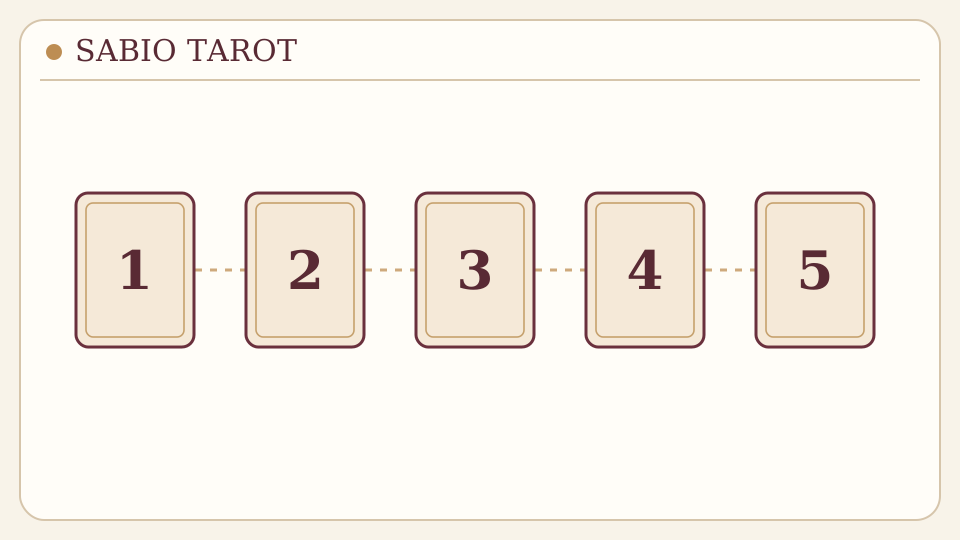
They use the conversation preparation diagram with five positions: preparation, message, listening, boundary, and closing. In the story, Two of Wands, Ace of Swords, Two of Cups, Four of Pentacles, and Page of Pentacles appear. They are not read as a job forecast. The Two of Wands in preparation invites comparison of two routes. The Ace of Swords in message can help formulate what Amir is looking for in another position. The Two of Cups in listening reminds them that an interview is also an exchange. The Four of Pentacles in boundary points to what personal data or conditions he does not want to give up without thinking about it. The Page of Pentacles in closing points to researching a specific vacancy.
The V&A contextualizes the visual tradition of tarot decks; Vera describes the edition she uses and separates what is visible from her association. She does not present a drawing as proof that Amir will be hired. Nor does she turn the cards into permission to ask about intimate conflicts that Amir has decided not to discuss.
The first consent pause
When they reach the Four of Pentacles, Vera suggests that perhaps Amir is afraid of losing security. Amir replies that he prefers not to talk about savings and that his concrete concern is the schedule. Vera does not insist or “go deeper” because the card might seem to invite it. She adjusts the reading: the boundary is rest time, not a bank balance. This moment is central. Consent shows when the reader accepts a correction without defending their hypothesis as if it were a truth.
There are two possible readings of the four: protecting a necessary resource or holding back something that could be used. Vera asks which one, if any, is useful to Amir. He identifies rest. If he had said “none,” they could leave that card without a conclusion. A good reading does not need every symbol to have an answer. The real possibility of not answering is part of the initial agreement.
Two hypotheses for the job search
The first hypothesis is that Amir needs to explore better positions without resigning from his current one yet. The second is that the main problem is negotiating schedule or tasks within his current job before looking outside. The cards do not decide for him. Amir can look at offers, talk with trusted people, and review real conditions. The Two of Wands helps compare routes; the Page of Pentacles suggests researching a vacancy, but it does not force him to apply or give Vera permission to write on his behalf.
Vera summarizes: “It seems useful to compare alternatives and clarify what schedule you need. You can research without sharing data you do not want to discuss here.” Amir decides to look for three offers and note conditions. He does not decide to resign in the session. If he later consults clauses, he will do so with a competent professional. The reading ends with a voluntary action, not with an order.
The possibility of stopping changes the session
Suppose a disturbing card were to remind Amir of a painful experience. He can say “I prefer to stop” without explaining why. Vera closes, does not draw a clarifying card to reassure him, and does not later publish an “anonymous” story based on his experience. The absence of a name does not eliminate all identifiable data. To share a real case, specific permission would be needed and details that could reveal the person would need to be reviewed. Vera, in this fictitious example, decides not to share any detail about Amir.
Consent can also be withdrawn after a photo or note, according to what was agreed and applicable obligations. In this example there is no recording; if Vera had wanted to take a screenshot to study, she should ask for specific permission before doing so, explain the use, and accept a no. Being friends does not amount to authorization to disseminate a private conversation.
Practical script in five sentences
Before starting: “What question would you like to work on, and what topics do you prefer not to touch?”. When describing a card: “I see this in the image; one possibility is this, does it seem useful to you?”. When corrected: “Thank you, I’ll adjust the reading.” If discomfort arises: “We can stop or change the subject.” When closing: “What decision do you want to take away, if any, and what information will you need to verify outside here?”. They are simple phrases that leave space for the other person.
You can expand with useful questions for tarot, how to choose a spread, and Rider-Waite Tarot from Scratch. Amir’s case shows that reading for someone else is not about knowing more about their life than they do, but about creating a conversation where they can decide how much to share and when to end.