- Books
- Rider-Waite · start here
Rider-Waite Tarot for Beginners
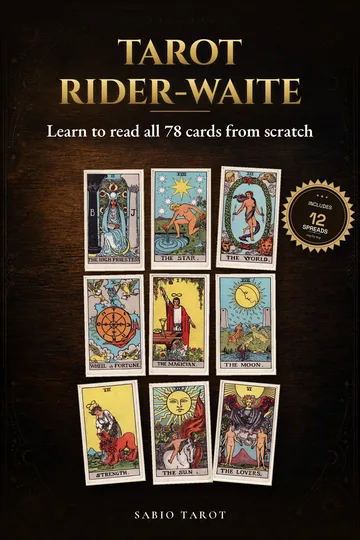
Tarot Rider-Waite: Learn to Read All 78 Cards from Scratch
A guide to observing Rider-Waite-Smith images, understanding each card and moving from theory to a complete reading.
- English
- 78 cards
- Scenes and spreads
Shop by country and format
Each link uses the ASIN for that format. In Ireland, choose Amazon.co.uk for Kindle or Amazon.ie for print. Price, delivery and availability depend on the store.
This work in other languages
A course and a reference book
The chapters connect imagery, meaning and practice.
The deck and first reading
The 78-card structure, preparing a reading, asking questions and the differences from Marseille.
Major and Minor Arcana
Each card's scene, central meaning, upright and reversed nuances and applications in different areas of life.
Complete readings
Cards in pairs and groups, short spreads and the Celtic Cross, worked examples and a glossary.
The scenes are part of the method
Even the numbered cards in the Rider-Waite-Smith deck have illustrated scenes. This book asks what the figures are doing, which details stand out and how meaning changes with the question and nearby cards.
It introduces the deck and Pamela Colman Smith's visual contribution, then covers 22 majors and 56 minors before moving to questions, reversals, combinations and worked spreads. Read it in sequence or use the card entries as a reference.
Look at the scene before the keywords
Pick a card and describe who is there, what they do, where they look and which element dominates. Then consult its entry. This ties meaning to an actual image instead of a memorised definition.
When two cards appear together, ask whether one supports, challenges or modifies the other. The question and spread position complete the reading. You can add reversals once upright cards feel familiar.
Sabio Tarot · The book
What you will learn, step by step
The opening chapters give new readers a foundation: the difference between Major and Minor Arcana, how the deck is organized, and how to prepare a first reading. They move from asking a useful question to observing a card before reaching for a fixed keyword. You can begin without memorizing the entire deck.
The 22 Major and 56 Minor Arcana then become both a course and a reference. Card entries connect the image with a central idea, upright and reversed nuances, and use in a reading. Later chapters bring individual cards together through combinations, spreads and worked readings. A glossary and index make it easier to return to a card or concept.
A website exercise: draw one card each day for a week. Write down three visible details before reading its entry, then compare your notes at the end. This is an extra way to practise observation, not a quoted exercise from the book.
Reading Rider-Waite-Smith scenes
Even the numbered Minor Arcana carry scenes. A figure may face another character, hold an object or move across the card. Those details help you ask better questions, but they do not dictate a universal answer: the question and the position in the spread still matter.
Rider-Waite-Smith numbers Strength VIII and Justice XI. Pamela Colman Smith's historical illustrations provide the visual reference in these books. If your deck redraws the scenes, check its actual objects and gestures before applying an example that depends on them.
For a deck with illustrated scenes
In Rider-Waite-Smith, Strength is VIII and Justice XI. Its numbered minors have scenes. If your deck uses that system, this guide provides a starting point and a practice route.
Marseille uses Justice VIII, Strength XI and unillustrated pips; it has its own guide. If you already know the Rider-Waite cards and want to read pairs, choose the dedicated combinations book.
Frequently asked questions
Do I need experience?
No. The opening chapters introduce the deck before the first readings.
Are all 78 cards covered?
Yes: 22 majors and 56 minors, each with a reference entry.
Are there full spreads?
Yes. The book includes explained spreads and worked readings, including the Celtic Cross.
Is this the 500 combinations book?
No. This is the beginner's guide; the combinations dictionary is a separate volume.
More from the collection
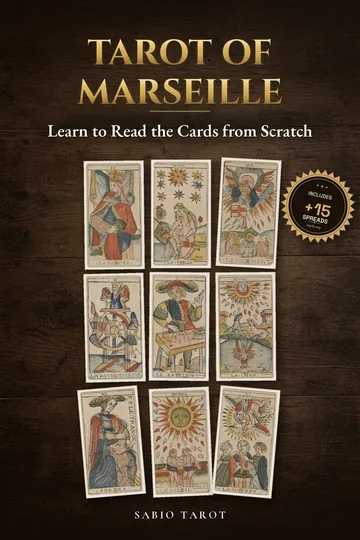 Marseille · Start
Marseille Tarot for Beginners
All 78 cards, unillustrated pips and your first spreads.
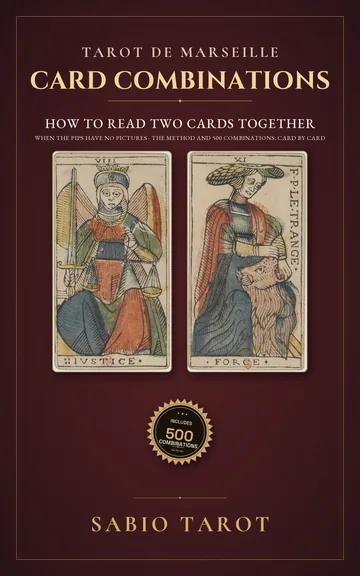 Marseille · Combine
Marseille Tarot Card Combinations
A method for reading pairs plus 500 card combinations.
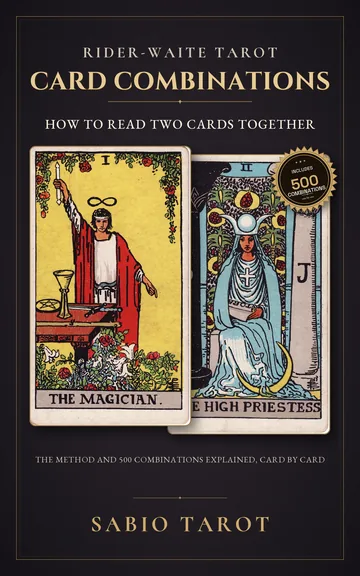 Rider-Waite · Combine
Rider-Waite Tarot Card Combinations
Read two cards together with a visual method and 500 pairs.
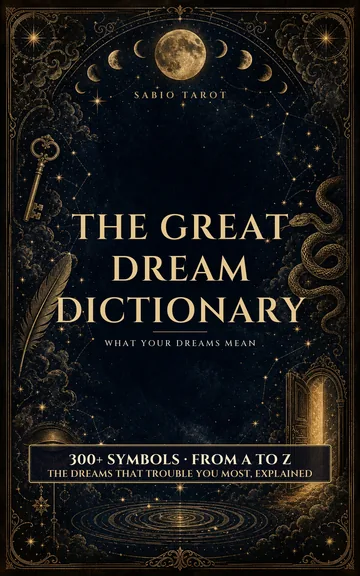 Dreams · Dreams
The Great Dream Dictionary
Hundreds of symbols, recurring dreams and a practical dream journal.