Sabio Tarot · Learn tarot
How to read tarot cards for the first time
You do not need to memorize 78 definitions before your first reading. Start with a clear question, a small spread and careful observation of the cards you actually draw.
1. Recognize your deck
Most familiar tarot decks have 22 Major Arcana and 56 Minor Arcana. Look at the numbered Minor Arcana before choosing a guide. Marseille-style cards usually show arrangements of suit symbols; Rider-Waite-Smith cards have illustrated scenes. These visual systems invite different ways of learning.
Check the numbering too: Justice is commonly VIII in Marseille and XI in Rider-Waite-Smith; Strength takes the other place. A book matched to your deck makes its examples easier to use.
2. Ask and lay out the cards
Try an open question such as 'What should I consider before this conversation?' Decide what each position means before you shuffle. One card is enough to begin; a three-card spread can represent the situation, something to notice and a possible next step.
Shuffle in a comfortable way, lay the cards in order and write down the question and positions. The layout gives the reading a structure; it does not turn the cards into proof of a future event.
3. Observe, connect and summarize
Describe what you see before opening a reference book: suit, number, objects, gestures and the direction of a figure's gaze. Compare your observations with the card's meaning in your particular deck. Then ask how the card's position and neighboring cards change its emphasis.
Finish in ordinary language: what theme appears, what supports or complicates it, and which choices remain with the person asking. Keep notes so you can revisit your reasoning. Tarot here is for reflection and entertainment and does not replace professional advice.
Sabio Tarot
Keep learning
Types of tarot decks: Marseille and Rider-Waite-Smith
Compare Marseille and Rider-Waite-Smith tarot: pip cards, illustrated scenes, Justice and Strength numbering, and choosing a matching guide.
Keep learning ↗History of tarot: from card game to card reading
A sourced introduction to tarot's fifteenth-century Italian evidence, its 78-card structure and the much later rise of divination.
Keep learning ↗About Sabio Tarot
Meet Sabio Tarot: tarot books, a practice that began as a hobby, and personal readings offered through Fiverr.
Keep learning ↗The collection
Related books
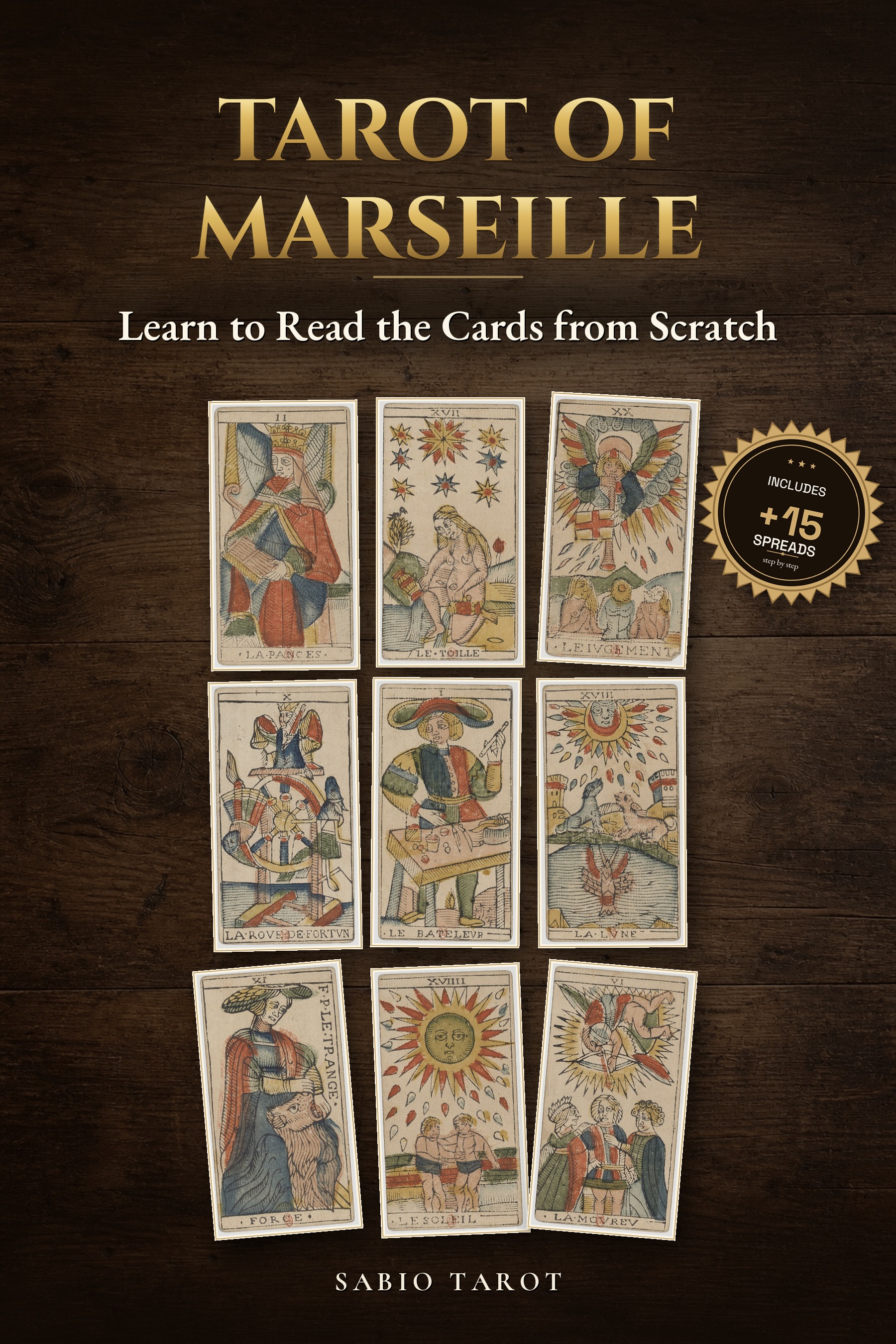
Marseille · start here
Marseille Tarot for Beginners
All 78 cards, unillustrated pips and your first spreads.
View book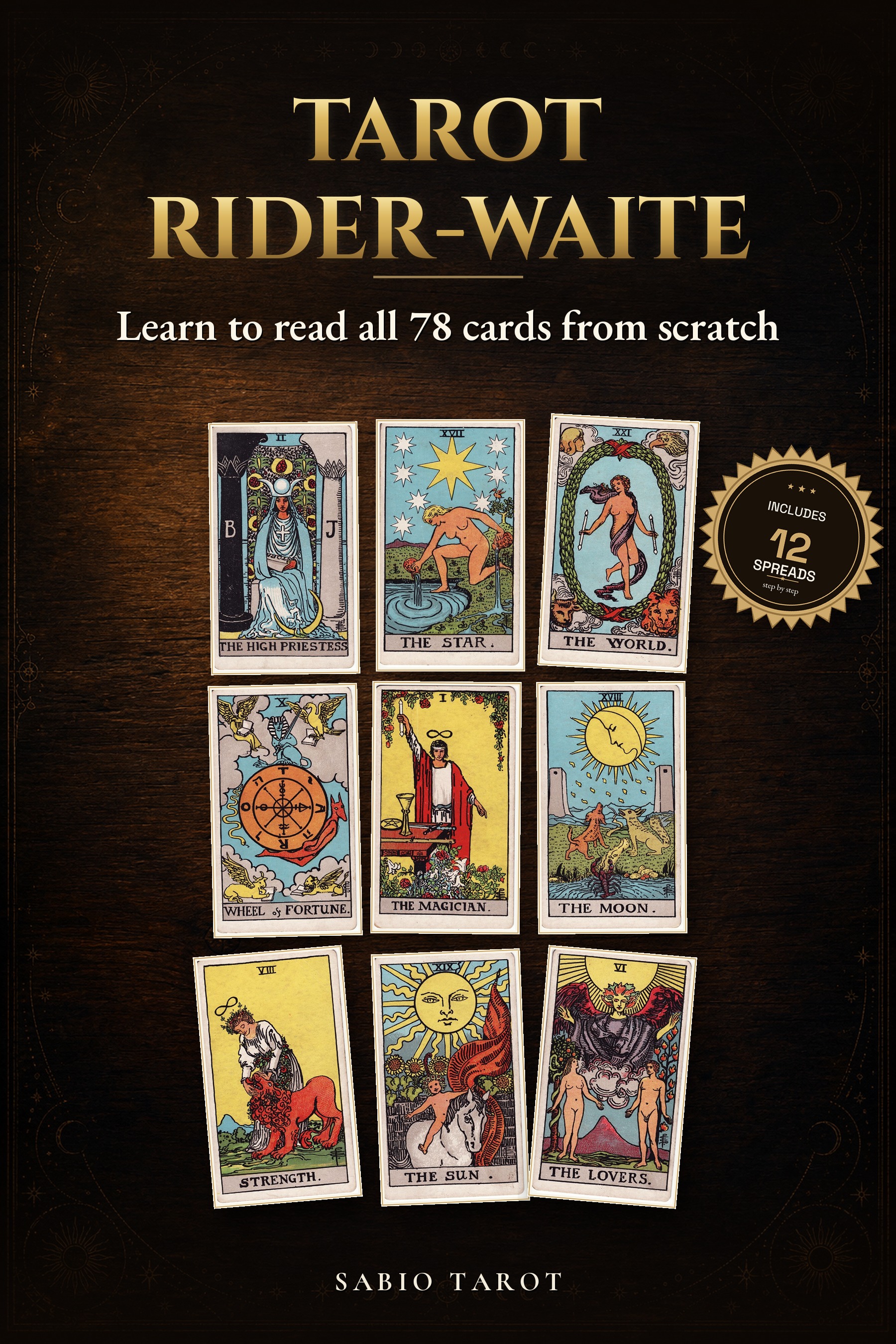
Rider-Waite · start here
Rider-Waite Tarot for Beginners
Learn all 78 cards through their scenes and practise spreads.
View bookPersonal readings
Would you rather have a reading for yourself?
See Sabio Tarot's current reading services and terms on Fiverr.
Tarot and dream interpretation are offered for entertainment and reflection. They do not replace professional advice.