Sabio Tarot · Tarot basics and learning
Unexpected News and Tarot
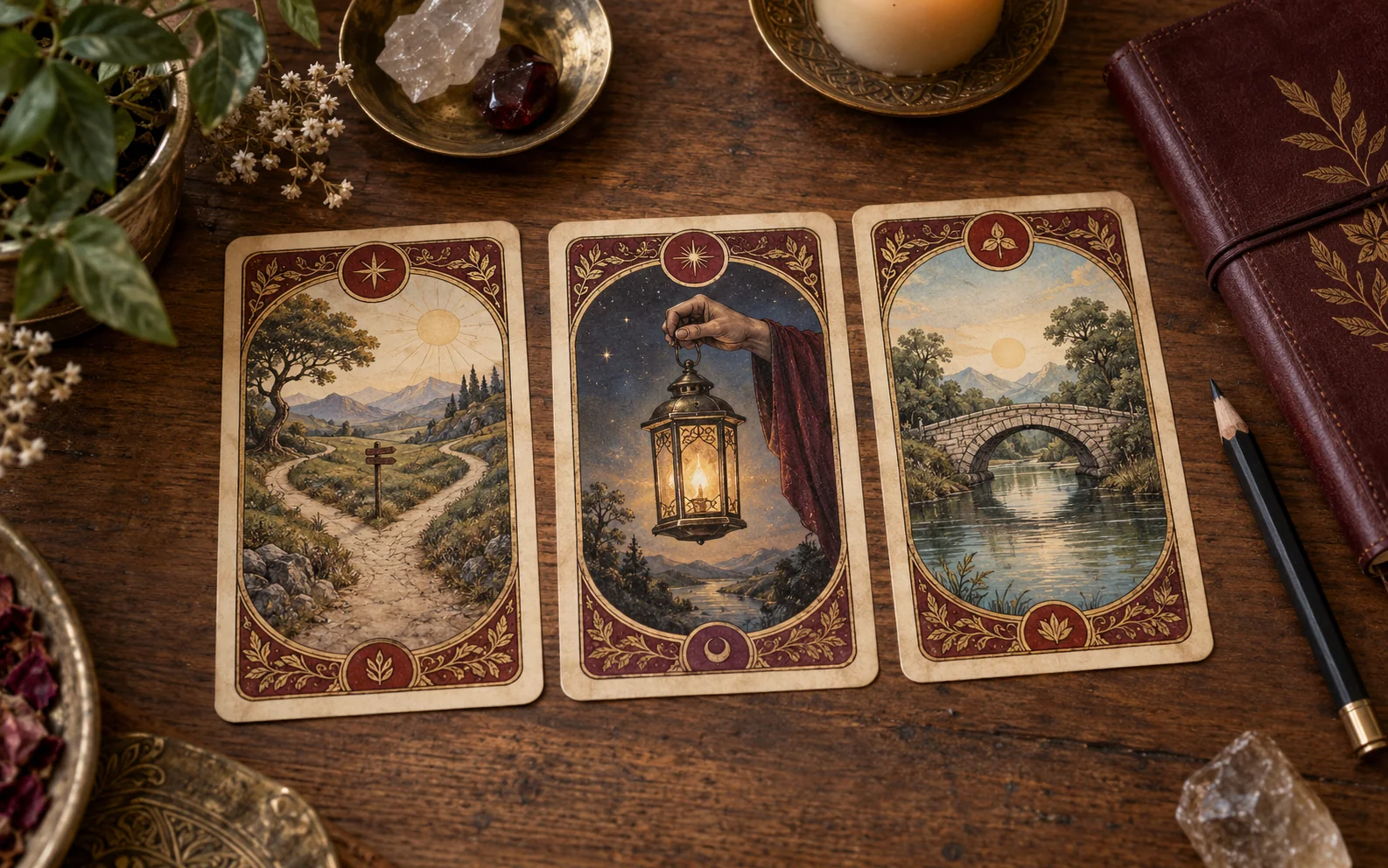
A call, an email, or a conversation can change the tone of a day. Sometimes we feel the need to draw cards right away to know what everything means. The problem is that, in the first minutes, we still do not clearly distinguish what happened from what we imagine could happen. Tarot can accompany a reflection when the news is already described, but it does not verify the content of a message or complete the missing data.
Before touching the deck, write three lines. Fact: “I have been informed that the project is changing dates.” Reaction: “I feel angry and I am afraid of losing the opportunity.” Unknown: “I do not know when they will decide the new schedule.” This separation does not force you to be calm. It only prevents an image of rupture from becoming proof that everything is lost. If the news requires urgent help—health, safety, a legal deadline, or a financial obligation—address that need first with the appropriate people and services.
Ask After Understanding the Message
Read the original message again if you can. Does it speak of a final decision or a possibility? Who can answer your questions? Is there a date or a document? Often a single word changes the scope: “postponed” is not the same as “canceled.” A card should not decide what the sender meant. If you cannot ask right away, note the uncertainty and avoid filling it with a categorical interpretation.
The consultation can focus on your response: “What do I need to sort out before writing about this change?”, “What part of my plan can continue while I wait for information?”, “What support should I ask for?” These questions give room for action. “What will happen now?” opens so many possibilities that any card can seem like a retrospective answer. When new information appears, you will need to be able to compare your reading with what you actually knew when you did it.
If the news affects you emotionally, you can also decide not to consult today. A pause, a walk, or talking with a friend are not a lack of respect for tarot. The cards are most useful when you can describe the question and read the image without taking it as an order to act immediately. There is no magic amount of time you must wait; assess whether you are able to hold ambiguity.
A Spread About the Next Step, Not About the Whole Future
Set out two or three positions: 1) what fact I should acknowledge; 2) which interpretation of mine needs checking; 3) what the proportionate next step is. In the first, the fact comes from the message, not from the card. In the second, note at least two possible explanations. In the third, look for a reversible action if data is still missing. The reading should not end in a conclusion that contradicts the original message.
You can also use a single card and write two paragraphs: what is visible in the image and what makes you think about your reaction. If The Tower appears, avoid automatically translating it into catastrophe. The news may have broken an expectation; that does not prove that the worst-case scenario will happen. If The Sun appears, do not assume that there will be a favorable solution: clarity may consist of asking a precise question.
Fictional Example: A Postponed Exhibition
Nadia had prepared several pieces for a group exhibition. She receives an email saying that the opening is postponed due to renovation work in the gallery and that new dates will be sent. She reads “postponed” and feels “they have canceled my work.” Her initial question to tarot is “Is my opportunity over?” Before shuffling, she copies down the real fact: the organization has not canceled the exhibition and has not yet announced a schedule. She reframes: “What can I do with my pieces while I wait for a confirmed date?”
In this invented example, Nadia draws Wheel of Fortune, Four of Pentacles, and Page of Wands with a Marseille Tarot. Wheel of Fortune in the first position helps her recognize an external change: she does not control the renovation work. Four of Pentacles in the second makes her think that she is holding onto her original plan as if it were the only way to show the work. It is a hypothesis about her reaction, not news about the gallery. Page of Wands in the third suggests preparing a new piece or better documenting the existing ones, a task she can do without encroaching on the organization's decisions.
Nadia decides to reply to the email with two verifiable questions: whether the renovation work affects the selection of artists and when they expect to communicate the new date. Meanwhile, she photographs the pieces in good light for her archive. If they later tell her that the exhibition is canceled, she will be able to revise the plan; if they confirm a new date, she will too. The reading did not predict any of those answers. It allowed her to move from an alarmed interpretation to a useful and reversible action.
With another deck, the scenes of the number cards could change. In the Marseille Tarot, Nadia observes the number, the suits, and the composition of her edition; she does not interpret a scene that appears only in Rider-Waite-Smith. She can consult how to read Marseille number cards if she needs guidance.
The Risk of Explaining Afterward What You Didn't Know Before
Imagine that the organization ends up canceling the exhibition. It would be easy to claim that Wheel of Fortune “was announcing it.” But the same symbol could fit a simple date change, and at the time of the spread the email mentioned a postponement. Keep your original text dated. If you wrote “there may be more changes and I need a flexible plan,” that interpretation was prudent. If afterward you convince yourself that you had seen an exact cancellation, you are adding retrospective precision that the reading did not have.
This care is not intended to take away value from the symbolic experience. It allows you to learn from it. If a card made you recognize an emotion, note it. If it pushed you to verify a fact, note it. If it made you assume an unjustified certainty, note that too. An honest practice can include things you got right, mistakes, and phrases that remain open.
A Three-Line Closing
End with “I know,” “I don't know,” and “I will.” For example: “I know that the exhibition is postponed; I don't know the new date; I will ask about the schedule and keep my pieces available.” If the news was painful, the third line can be “I will talk to someone” or “I will rest before responding.” Not all news calls for productivity.
To practice the difference between hypothesis and certainty, read how to talk about uncertainty in a reading and how to close a reading. If you work with number cards without scenes, the Marseille Tarot from Scratch manual explains a compatible method. On its page, you can consult the purchase options available for your country.