Sabio Tarot · History and curiosities
Can someone else touch your cards?
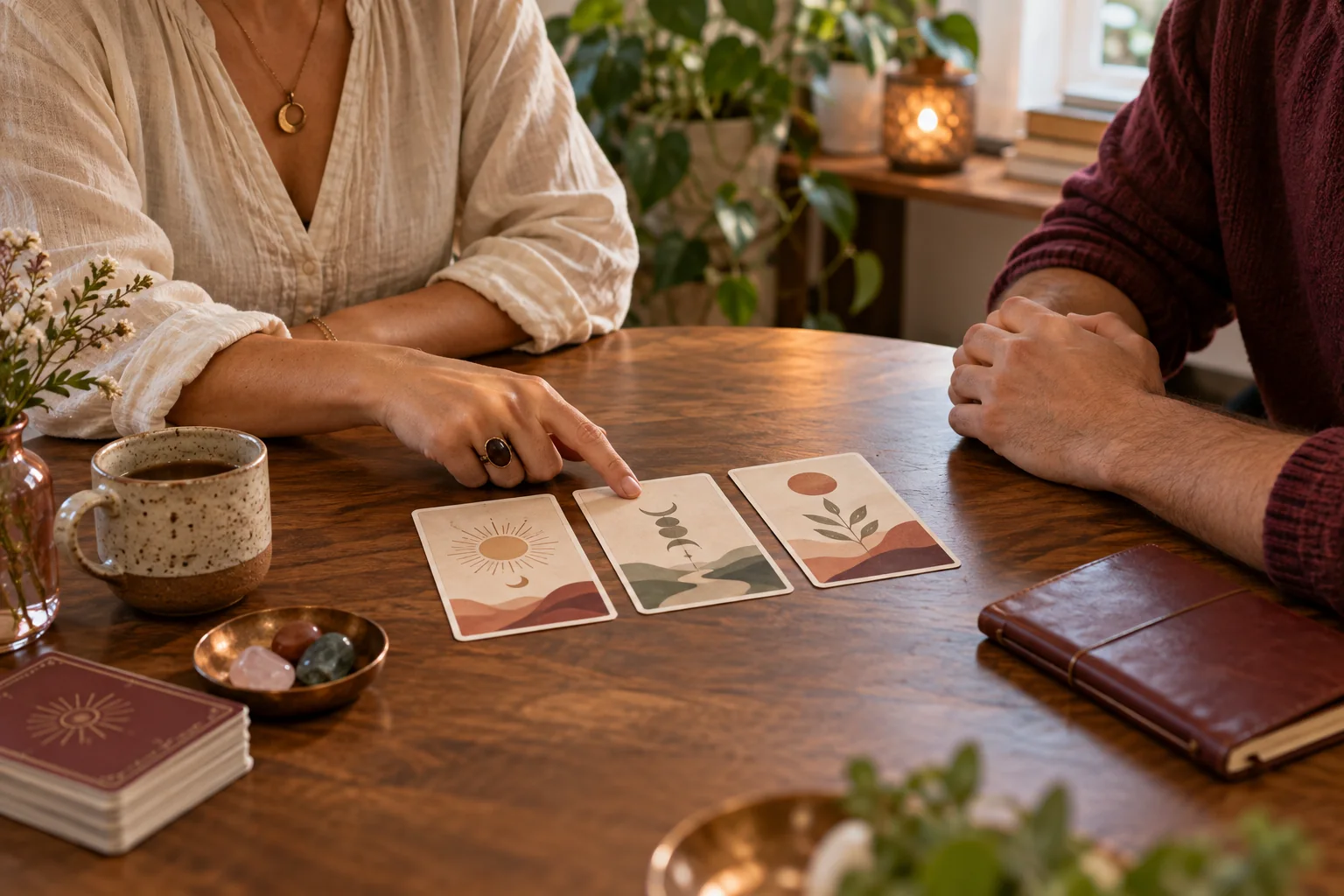
At a tarot table, someone reaches out to shuffle and the deck owner hesitates. There is no single answer valid for all decks and readers. There are personal preferences, issues of object care, and a simple social rule: ask before touching something that belongs to someone else. The reading does not necessarily become incorrect if another person touches the cards, nor is there an obligation to allow it. A clear rule explained with respect prevents misunderstandings better than a prohibition wrapped in mystery.
What can be stated with sources
The V&A surveys uses and designs of tarot over several centuries, including games and later divinatory practices. The British Museum records a physical Marseille deck with specific materials and techniques. These sources show that the cards are objects used and preserved in diverse contexts. They do not establish a universal mandate about who should touch them in every contemporary reading. If someone attributes a prohibition to a specific tradition or date, they need a document that describes it. Repeating it on social media is not enough.
The absence of a universal rule does not eliminate local norms. A community, a reader, or the maker of a delicate deck may have guidelines. The point is to attribute them correctly: “In my sessions I prefer to shuffle myself because I take care of this copy” is a legitimate preference; “no one can touch tarot cards or the reading is ruined” is an absolute claim that requires proof and can create unnecessary anxiety.
The physical care of the deck
Cardstock, ink, lamination, and edges wear down with handling. A new, sturdy deck can withstand different handling than a rare, damaged, or sentimentally valuable edition. Dry, clean hands, a table without liquids, and a shuffling method that does not bend the cards are practical measures. If it is shared with children or in a workshop, use a copy intended for that use and explain how to treat it. Do not attribute a moral quality to the person for leaving an accidental mark. Material damage can be repaired or prevented with material rules.
A historical museum deck is not equivalent to a commercial deck for readings. The collection record helps one understand that objects have provenance and condition; it does not suggest that they can be freely handled. At home, you decide the level of use of your cards. If an edition is hard to replace, it is reasonable to keep it for private study and offer another for shared sessions. The choice does not indicate greater interpretive power of one or the other.
Consent in both directions
The person receiving the reading also should not feel obligated to touch cards. Some prefer to point to a card while the reader shuffles, others feel comfortable cutting the deck, and others wish to observe without intervening. Present the options before starting: “You can shuffle if you want; I can also do it myself.” If you do not want them to touch the deck, say “I prefer to handle this copy; you can choose the cut by indicating when I stop.” The choice must be real, not a test of spiritual commitment.
Ask permission before placing cards near personal objects or photographing the table. A shared reading can generate private information in the notebook or image. Consent to touch the deck does not equal consent to record, publish, or retain data. Keep those decisions separate. If the session is professional, it is advisable to explain the procedure in advance so the person knows what they are attending for.
Fictitious example: two different preferences
Fictional case. Paula brings a paper deck with delicate edges to a workshop. Sergio, new to tarot, asks if he can shuffle it. Paula replies that she prefers not to because the edge is already worn and offers a second practice deck. Sergio accepts and both work. No one attributes “negative energy” to Sergio or makes him feel excluded. The boundary refers to an object and is raised before contact. With the second deck, Sergio learns to shuffle without bending cards.
At another fictional table, Inés invites the person receiving the reading to cut the deck. The person says they do not want to touch it. Inés replies that they can choose a card by pointing to a number or simply observe while she shuffles. The session continues. The value of the reading does not depend on passing a tactile test. If Inés personally believes that touching helps concentration, she can say so as a preference and accept a no. The freedom of both is compatible with symbolic play.
Beliefs about “energy” and respectful language
Some people have a practice in which they reserve the cards for individual use. Others believe that contact from the person receiving the reading is part of the ritual. You can explain your practice without presenting its effectiveness as a proven fact. “It helps me to keep a routine” or “I like the person to participate physically” informs. “If you touch my cards, you contaminate them” attributes a negative quality to the other person and can be hurtful. If someone wants a transition ritual after a session, they can do it as a personal preference, without claiming that the contact caused invisible harm.
The word “cleaning” can refer to material care or a symbolic gesture. Distinguish between the two. If the concern is hygiene, use concrete measures appropriate for the object; do not spray cards with products without checking compatibility. If the concern is concentration, a pause or reorganizing the deck may be enough. If it is privacy, store notes and photographs responsibly. Each problem needs a response of the same kind.
A table agreement in four sentences
Before a shared reading, communicate: “This is the deck I will use.” “You may or may not touch it; either option is fine.” “If you touch it, I prefer dry hands and shuffling without bending.” “I will not take photos without asking permission separately.” Adapt the text to your practice. A simple agreement removes a lot of tension. If the deck is private, replace the second sentence with a clear boundary and offer another form of participation. There is no need to justify it with a dubious historical story.
The scene illustrates a possible session, not a rule about who should touch the cards. Before starting, agree with the other person whether they wish to shuffle, cut, point, or simply observe; none of those options proves greater spiritual commitment.
Closing
Another person can touch your cards if both parties agree and the deck is cared for. You may also prefer that no one does. Marseille Tarot from Scratch can help you start with the deck you choose. The practical criterion is to ask, explain boundaries, and offer options. The deck is an object of study and, for some people, an intimate object; both dimensions deserve respect without inventing a universal law.