Sabio Tarot · Minor Arcana
Seven of Swords: strategy, discretion, and trust
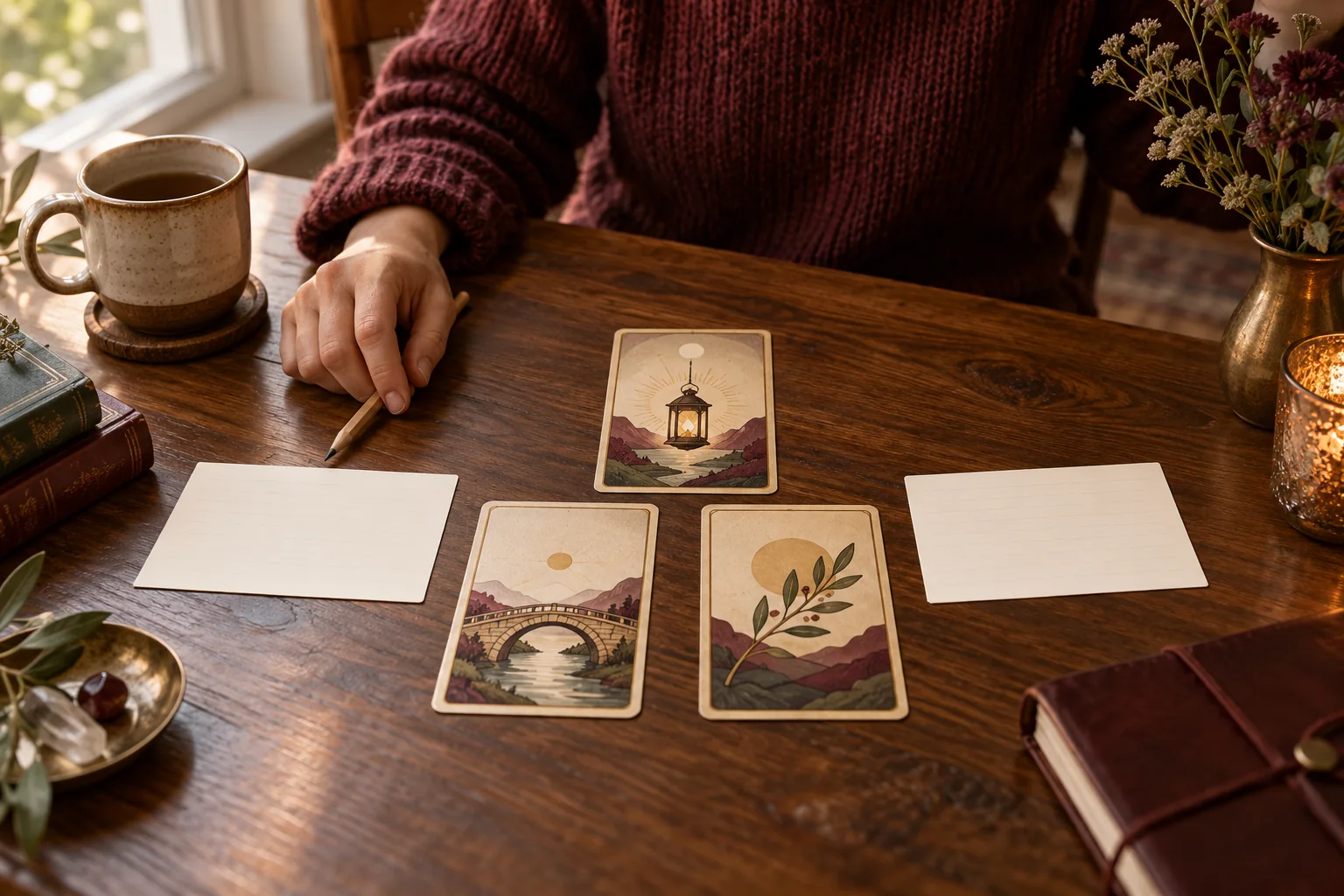
A figure carrying swords away from a camp can seem like proof of theft. That conclusion is tempting and risky: the card is not a recording of a real person or proof of a specific lie. The Seven of Swords allows us to study strategy, reserve, information boundaries, and trust, always with alternative hypotheses. A responsible reading can ask what data is missing before sharing something or accusing someone. It must not use an image to sow suspicion without facts.
- 15
- 26
- 37
- 48
What an identified edition represents
Waite describes a man carrying away five swords while two remain on the ground, near a camp. He notes that the interpretations attributed to the card are varied and even discordant. That caution from the primary source matters: the author himself does not offer a simple translation from image to verifiable crime. The scene belongs to Rider-Waite-Smith. In a Marseille numeral, there may be seven swords without a figure or camp. The V&A explains the importance of Pamela Colman Smith's iconography among different decks.
Describe the visual facts without assigning intention: figure in motion, five swords carried, two left behind, camp nearby. 'Steals' is already an interpretation. 'Flees' is too. The image does not show prior agreement, ownership of the swords, or the figure's reasons. In fiction we can invent a plot; in a reading about real people we must maintain the difference. The reader can say 'the scene makes me think of acting with incomplete information' without declaring a third party guilty.
Three hypotheses for the same matter
Hypothesis one: legitimate discretion. There is personal information or a plan that should be shared only with those entitled to know it. Hypothesis two: incomplete strategy. The person is acting quickly and leaves two important elements unattended. Hypothesis three: lack of transparency. There may be a trust problem that deserves a conversation or a document review. No hypothesis is confirmed by the card. For each one, note what external evidence you would look for and what harm it would cause to act as if it were true without verifying it.
A conversation about trust must distinguish facts, interpretations, and emotions. 'I did not receive the documentation' is a fact that can be verified. 'He or she is hiding something from me' is an inference that may be false. 'I feel insecure without that information' expresses a need. The card can help organize these three sentences, not merge them. If there is risk of real fraud, consult contracts, transactions, and relevant authorities; do not replace an investigation with a spread.
Fictitious example: a collaboration proposal
Invented case. Diana is preparing an editorial collaboration. The other party is slow to send a budget, and the Seven of Swords appears in the 'pending data' position. At first she thinks 'they are deceiving me.' She makes the hypotheses table. Legitimate discretion: they do not yet have permission to disclose a supplier's costs. Incomplete strategy: they simply forgot to add a line item. Lack of transparency: they avoid sharing conditions before asking for commitment. She does not know which is true.
Diana asks by email for an itemized budget and a response date. Meanwhile, she does not sign or accuse. She receives an explanation: the supplier has not yet confirmed a cost. She decides to wait with a clear deadline and considers another option. The card did not reveal the other party's intention; it reminded her that there was enough information to ask, but not enough to conclude. If the budget does not arrive, she can make a decision based on that verifiable absence. The interpretation remains subject to the facts.
In a fictitious relationship reading, the same prudence is essential. If someone fears infidelity, the Seven of Swords proves nothing about another person. It can open reflection on trust, boundaries, and conversation, but it must never be used to present an accusation as fact. If there are signs of control, invasion of privacy, or insecurity, it is advisable to seek appropriate support and respect everyone's rights. The reading does not authorize checking other people's devices or surveilling anyone.
Strategy does not equal trickery
Planning before announcing a project can be prudent. Preparing for a delicate conversation can be too. Discretion becomes problematic when it breaks agreements, hides information that another party needs in order to consent, or evades responsibilities. The useful question is 'what information am I entitled to withhold, and what should I communicate?' To answer, one will need to know the relationship, commitment, and applicable rules. Tarot does not by itself define a contractual or legal obligation; it only helps detect that the boundary deserves attention.
A strategy can fail by leaving elements behind. The two swords in Waite's scene are a visual detail that can inspire the question 'what data or person am I omitting?', but it does not mean that exactly two pieces are always missing. Make a list of the decision's requirements: budget, schedule, consent, safety, responsible parties, and method of closure. Mark which ones are verified. In this way the metaphor has a practical outlet without improvised numerology.
A reading in a resource, risk, or action position
In 'resource,' the card may suggest analyzing before presenting a plan. In 'risk,' it may invite you to verify whether a clever solution would damage trust. In 'action,' it may indicate the need to obtain a piece of data through a clear channel. Do not change position when a hypothesis becomes exciting. The position guide helps maintain the framework. If another card seems very positive, do not use that as absolution; if it seems negative, do not use it as condemnation. Both are interpreted images.
Write a table with four columns: hypothesis, necessary evidence, prudent action, and cost of being wrong. That last column matters: accusing unjustly can damage a bond, while ignoring a contractual detail can expose you to loss. Balance is built with proportionate and verifiable steps.
Closing
The Seven of Swords is not a lie detector. Rider-Waite Tarot from Scratch allows you to study the Waite-Smith scene; in a real reading, use it to separate facts, hypotheses, and actions. Ask what you know, what you assume, and what information you can legitimately request. If the answer requires investigating, do it outside the spread. That pause protects trust better than an accusation born from a card.