Sabio Tarot · Minor Arcana
Ten of Pentacles: Family or Institutional Continuity
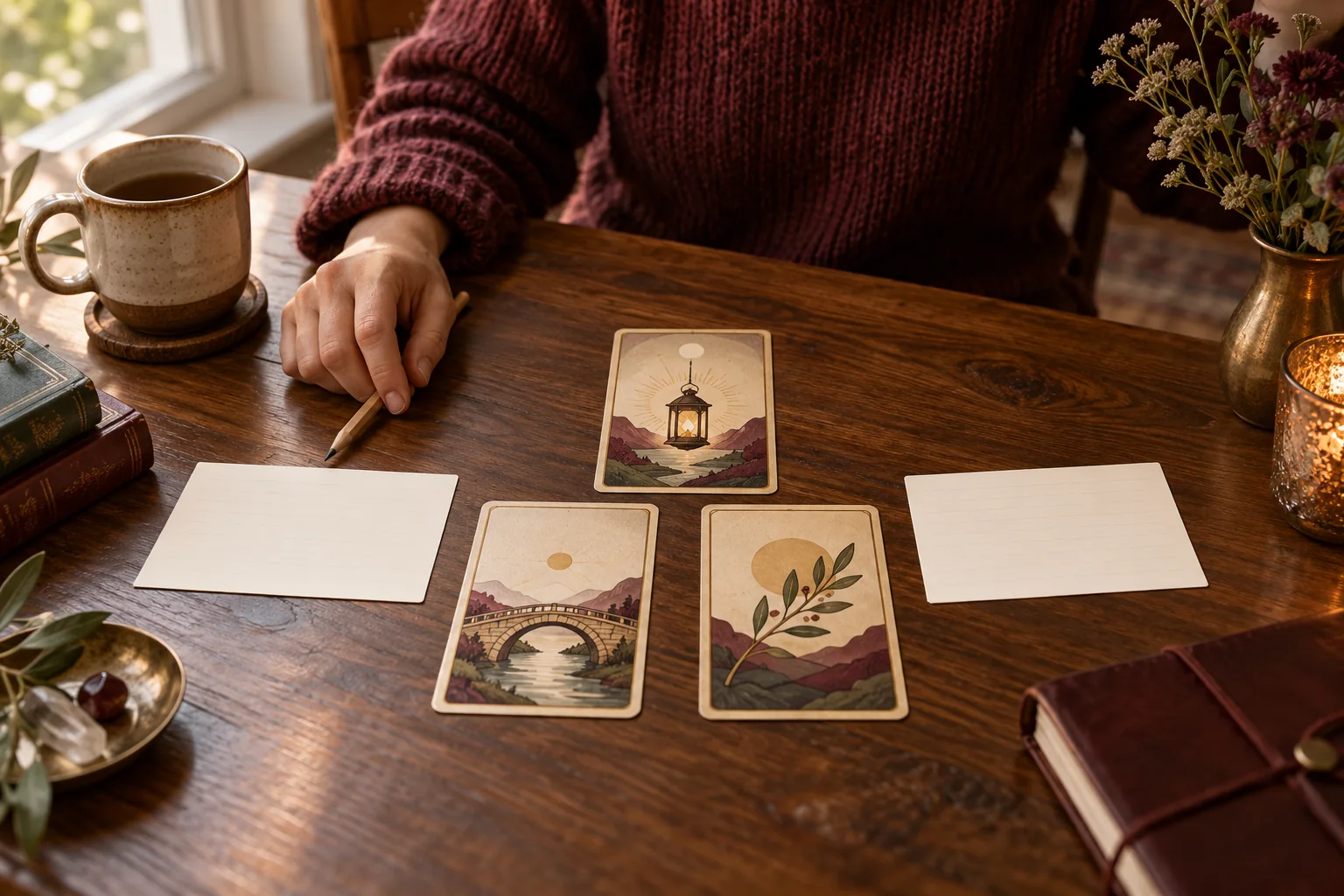
A house, several generations, and coins can suggest inheritances or fortune. The Ten of Pentacles from Rider-Waite-Smith contains that kind of image, but it does not promise money, property, or a favorable will. It can serve to examine what is transmitted, who participates, what agreements sustain continuity, and what obligations accompany a legacy. A legacy can be material, cultural, professional, or emotional. A respectful reading avoids prescribing one form of family and returns to documents when the question has legal or financial consequences.
- 19
- 210
Waite's Scene and What It Does Not Prove
Waite describes figures of different ages near an arch and a house, accompanied by dogs, and relates the card to family, archives, and profits. It is a primary source for Rider-Waite-Smith; it is not a property record of the querent. The image does not show ownership of the building, names of heirs, or terms of an agreement. A Marseille deck may show ten coins without a family scene. The V&A contextualizes the diversity of decks and the development of narrative minors. When describing the card, identify the edition and avoid mixing compositions.
Look at the spatial relationship between the figures and the threshold. Who seems to be inside or outside? Is interaction observed? Do not assume specific family relationships from size or apparent age. Waite offers a reading of the scene, but the card does not certify biographies. It may awaken a question about belonging or succession; the answer depends on the person's real history. A reader can speak of institutional continuity—an archive, a trade, a cooperative—without forcing a narrative of blood or marriage.
Four Types of Legacy
The material includes money, housing, tools, and obligations; it requires documentation when there are decisions. The cultural includes language, recipes, stories, and ways of celebrating. The professional includes knowledge, methods, and work relationships. The emotional includes care and memories. A person can receive some and reject others. Not everything inherited must be perpetuated. Ask what is worth preserving, what needs adaptation, and what should stop being transmitted. A reading can help formulate those criteria without deciding for those who will be affected.
Continuity also has a cost. Maintaining a house requires expenses, agreements, and work; preserving a community project needs people responsible and succession. Do not turn “legacy” into an exclusively positive word. Nor turn it into an inevitable burden. If the question is about a legal inheritance, review documents and consult a professional competent in the relevant jurisdiction. Tarot does not confirm the existence of assets, distribution, deadlines, or rights. Its role can be to prepare questions to bring to that conversation.
Fictitious Example: A Neighborhood Library
Invented case. A group of neighbors runs a small library. The founder wants to reduce her involvement and asks how to care for the project. The Ten of Pentacles appears in the “continuity” position. A simplistic reading would say “the library will last for many years.” The group reviews facts: catalog, keys, rent, insurance, volunteers, and agreements about loans. It discovers that only the founder knows the account password and supplier contacts. The problem is not lack of will, but concentrated knowledge.
They prepare a process document, two new people in charge, and a period of support. They agree to review sustainability in six months. They also ask what the founder wants to preserve: free access and kind treatment. The legacy is a set of shareable practices, not a prophecy of permanence. If the group cannot obtain resources, it could close carefully and transfer the books to another entity. That closure would not erase what was contributed. The card opened a conversation about transmission and responsibility.
Another fictitious case: a person receives objects from a deceased relative. The Ten of Pentacles does not indicate what to keep or what to sell. One can ask which objects have use value, memory value, or burden, speak with other people involved, and respect legal obligations. Grief is not reduced to appraisal. If there is conflict, seeking mediation or advice may be more useful than assigning intentions to absent relatives through cards.
Family Is Not a Single Format
Waite's scene reflects a domestic composition from a specific edition. Continuity can exist among friendships, chosen families, communities, apprentices, and teams. Do not tell a person without children that “their legacy is incomplete.” Do not suggest to another that they must maintain a surname or a property if they do not want to or cannot. The relevant question is which relationships and commitments they recognize as their own. An inclusive reading names possibilities without turning a historical image into a life norm.
Asking “who is left out of the agreement?” can be important. In an association, invisible volunteers may sustain tasks without a voice. In a family, someone may provide care without appearing in estate conversations. The card does not identify those people, but continuity analysis invites listening to them. If there is unequal power, record who decides and with what consent. Responsible legacy consists not only in transmitting resources; it also means reviewing the terms of that transmission.
A Timeline of Agreements
Draw a timeline with three segments: what was received, what we do now, what we want to leave prepared. In each segment, write resources, people responsible, and open questions. If a material asset appears, add where the documentation is. If it is a trade, note what knowledge still needs to be recorded. If it is an emotional tradition, ask who enjoys participating and who feels obligated. This line helps differentiate chosen continuity from automatic repetition.
For a spread, the guide to positions helps distinguish whether the Ten of Pentacles appears as a resource, risk, or next step. In “risk,” it might invite reviewing an inherited commitment that no one has questioned; in “resource,” a stable network. There is no single reading that guarantees gain.
Prudent Language Around Money and Assets
Avoid “you will receive an inheritance,” “you will buy a house,” or “your family will leave you everything.” They are material claims that the card does not substantiate and can influence important decisions. You can say “the image leads me to ask about shared agreements and resources” and encourage verifying data. If the person asks about a will, property, or taxes, the next step is documentation and professional advice. Symbolic reading can accompany emotions or priorities, but it does not replace rights or numbers.
Likewise, a card of abundance does not invalidate real concerns about scarcity. A person can have a rich emotional network and few economic resources, or the opposite. Separate dimensions. Ask what continuity they desire and what is sustainable. The answer may be a document, a conversation, a box of memories, or the decision not to continue a pattern that caused harm. The value of a legacy is not always expressed in coins.
Closing
The Ten of Pentacles from Rider-Waite-Smith brings together figures, a house, and coins in a scene of continuity. Rider-Waite Tarot from Scratch allows studying that edition. In real life, ask what is transmitted, who decides, what obligations exist, and what must be verified outside tarot. A good reading does not promise profits: it helps build clearer agreements about what deserves to continue.