Sabio Tarot · Learn tarot
History of tarot: from card game to card reading
The documented history of tarot starts with playing cards. Its later association with divination is a different chapter, and keeping those chapters apart makes the history more useful.
The earliest records
The Metropolitan Museum of Art places the earliest known tarot references in northern Italy in the 1440s and 1450s. These decks added pictured trumps and a Fool to four suits. They were used for a trick-taking game.
The familiar structure totals 56 suit cards, 21 trumps and the Fool. Early cards do not establish an Egyptian origin or prove that medieval players used them for fortune-telling.
Deck traditions developed
Tarot de Marseille names a family of graphic patterns reproduced in different editions. Its numbered Minor Arcana show suit symbols rather than narrative scenes. It is more accurate to identify a particular edition than to imagine one unchanging Marseille deck.
Much later, Pamela Colman Smith illustrated the Rider-Waite-Smith deck's numbered cards with scenes. That visual language influenced many modern decks and the way beginners learn them.
Uses and meanings changed
The Met notes that tarot's association with fortune-telling and the occult gained currency in the nineteenth century; that is not a description of its medieval function. Today people approach the cards as games, historical objects, symbols and prompts for personal reflection.
A card's old image does not make every modern interpretation an old tradition. Knowing which deck you use, and which reading method you follow, gives clearer context than an invented origin story.
Sabio Tarot
Keep learning
How to read tarot cards for the first time
A practical beginner's guide to choosing a deck, asking useful questions, laying out three cards and reading them in context.
Keep learning ↗Types of tarot decks: Marseille and Rider-Waite-Smith
Compare Marseille and Rider-Waite-Smith tarot: pip cards, illustrated scenes, Justice and Strength numbering, and choosing a matching guide.
Keep learning ↗About Sabio Tarot
Meet Sabio Tarot: tarot books, a practice that began as a hobby, and personal readings offered through Fiverr.
Keep learning ↗The collection
Related books
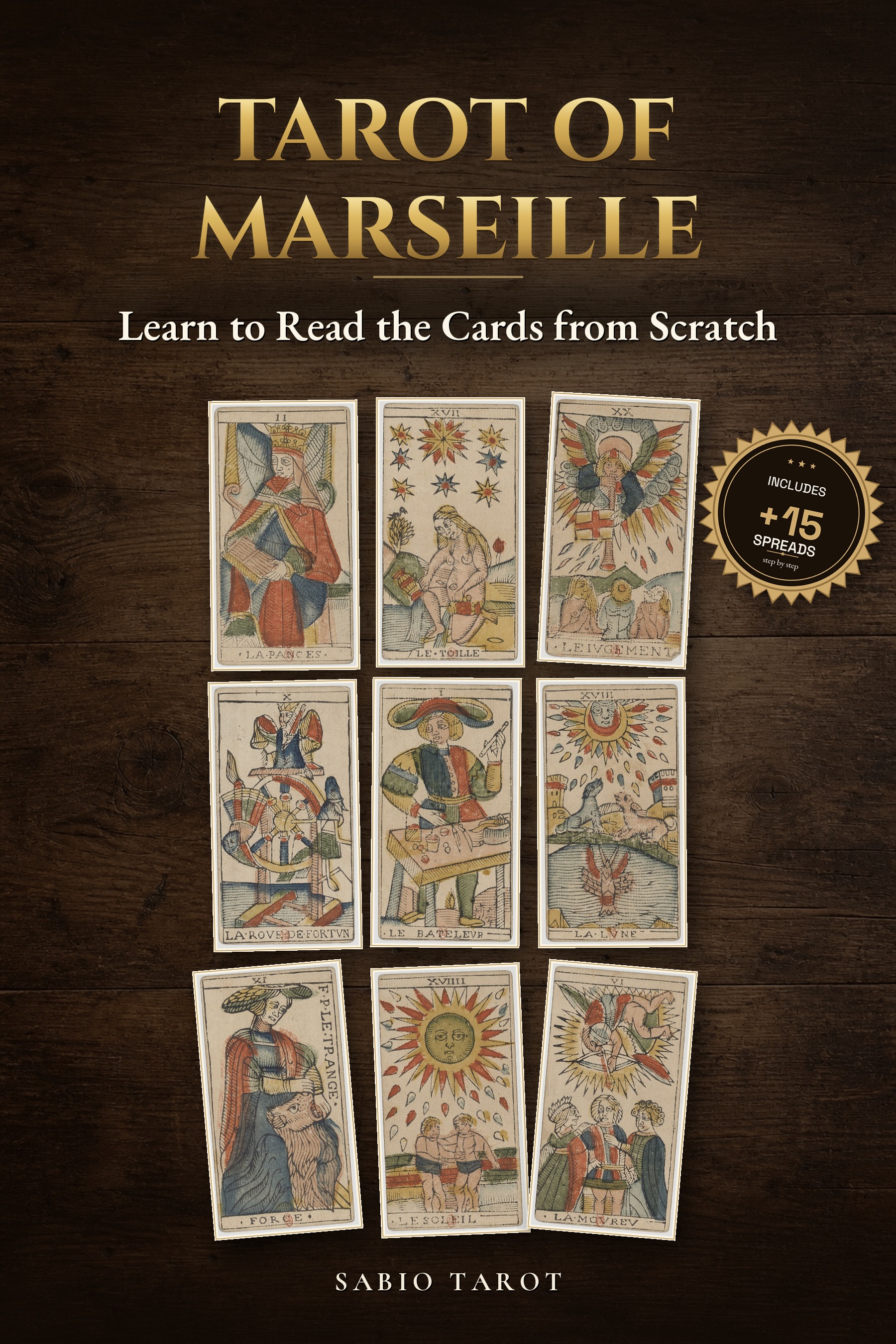
Marseille · start here
Marseille Tarot for Beginners
All 78 cards, unillustrated pips and your first spreads.
View book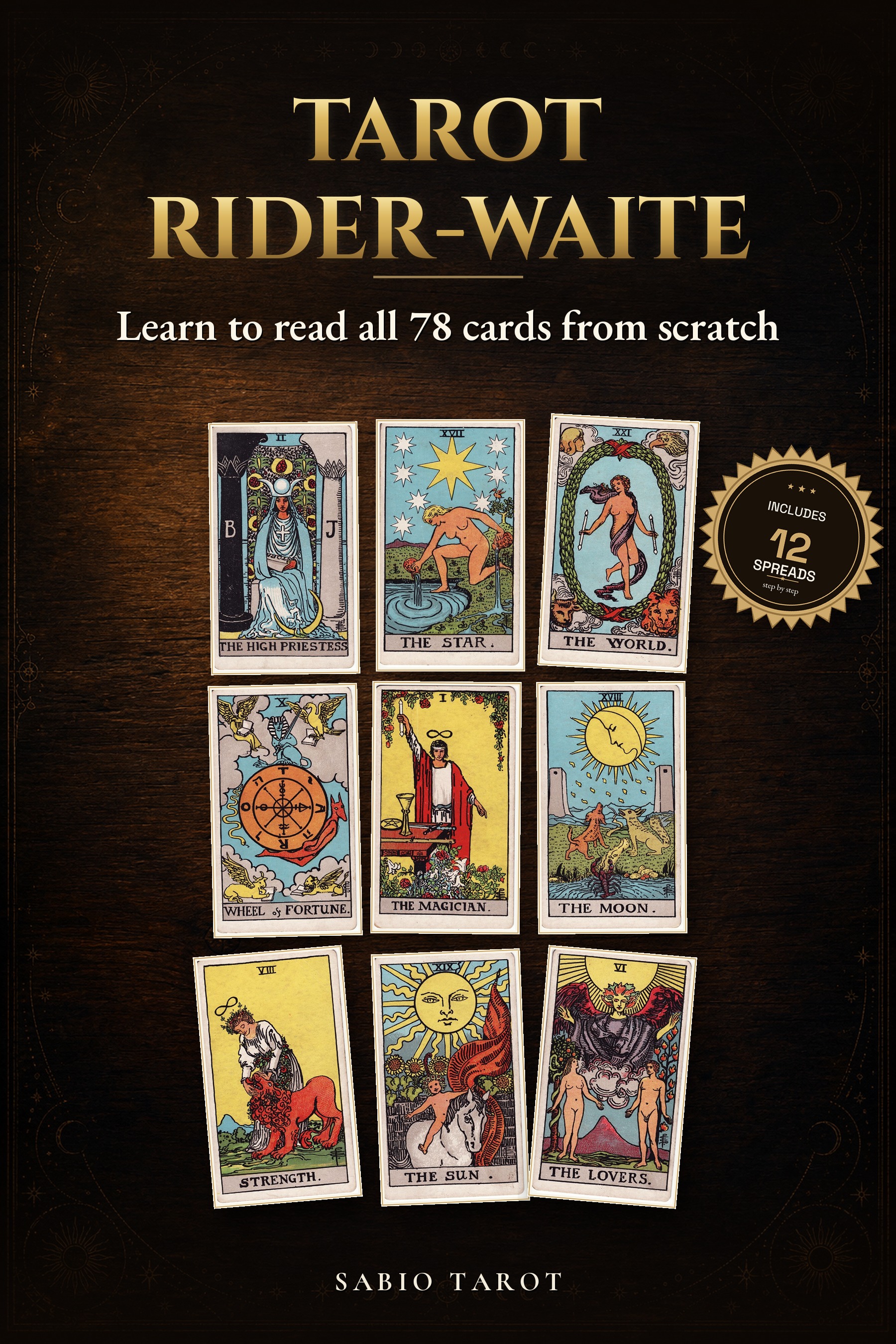
Rider-Waite · start here
Rider-Waite Tarot for Beginners
Learn all 78 cards through their scenes and practise spreads.
View bookPersonal readings
Would you rather have a reading for yourself?
See Sabio Tarot's current reading services and terms on Fiverr.
Tarot and dream interpretation are offered for entertainment and reflection. They do not replace professional advice.