Sabio Tarot · History and curiosities
Candles, Cloths and Crystals in a Tarot Reading
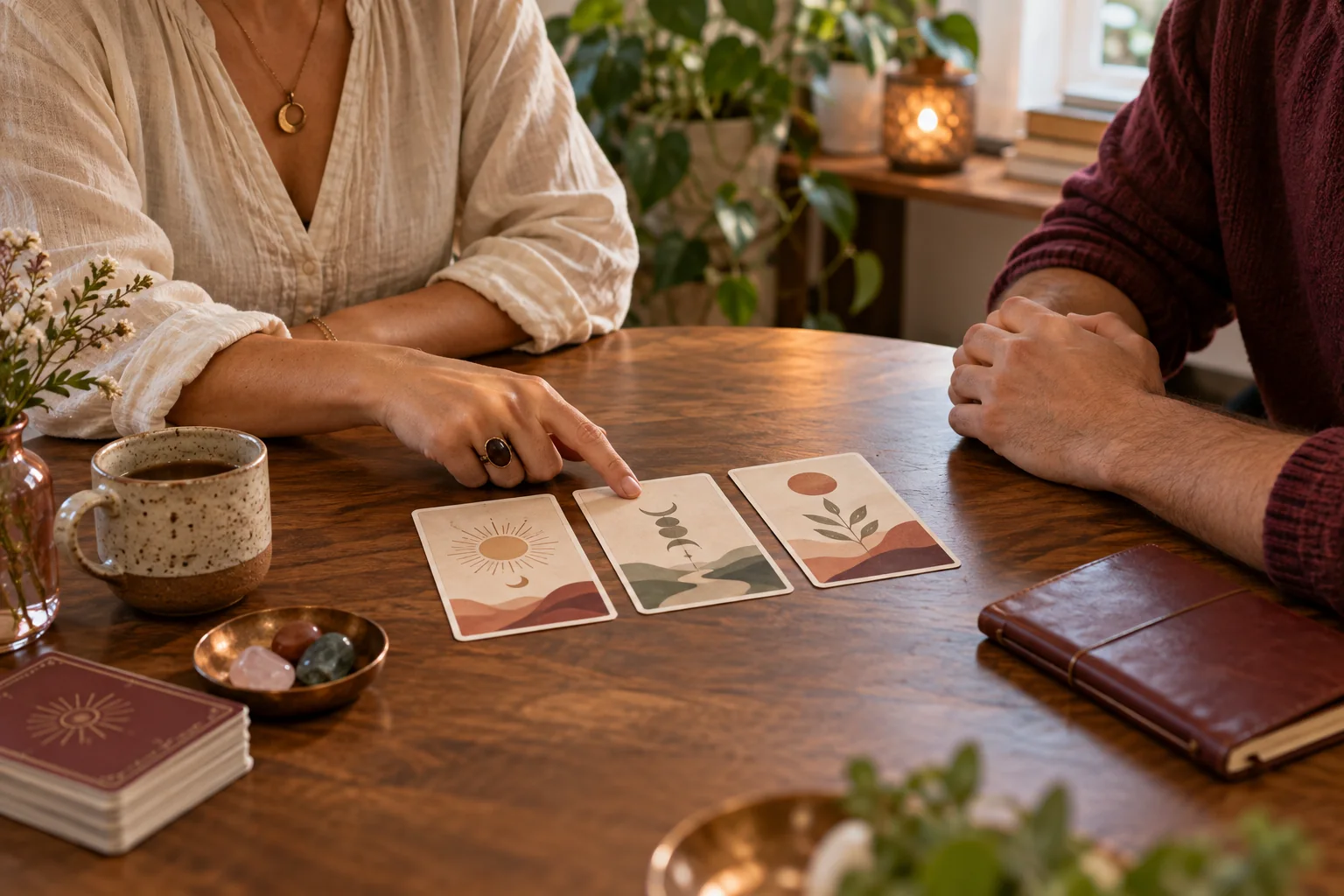
A tarot photo often shows a candle, dark cloth, crystals and smoke. It can be a pretty composition, but it is not the mandatory definition of a reading. Each object can serve a different function: atmosphere, material protection, personal reminder, or simply decoration. Before incorporating it, ask what it contributes and what risks or costs it adds. A clear table, identified cards, and a well-formulated question can be enough. This article distinguishes aesthetic choice from a historical or efficacy claim that would need evidence.
A table does not represent the entire history of tarot
The V&A documents cards used in games and, later, in divinatory practices, as well as editions from various periods. The British Museum catalogues a Marseille deck as a material object. These sources do not turn a candle, a crystal, or a cloth into a universal requirement for all eras. If someone attributes a specific combination of objects to a historical workshop or tradition, a specific source will be needed. A current image from social media can show a modern preference without proving antiquity.
That does not mean the table has to be emptied. One person may enjoy a ritual aesthetic, and another may prefer a clean kitchen table. The important thing is to say what is known. “I use this cloth so the cards don't slip” describes a practical function. “I like to light a candle to mark the beginning” describes a personal gesture. “The candle makes the spread truer” is a different claim, for which this guide provides no evidence. Separating them allows you to choose freely.
The cloth: a simple and verifiable function
A cloth can protect the cards from a rough surface, make it easier to gather them, and define a space. Choose a clean, dry fabric without a texture that catches the edges. If it slides too much, try another surface. It does not need a particular color or symbol to fulfill that function. If the cloth is part of a personal ritual, you can give it that meaning without claiming that color affects results. Wash it according to its material and avoid letting it retain moisture when storing the deck.
In a shared workshop, the cloth can also mark where the cards will be placed, keeping drinks and phones out. It is an easy table rule to explain. If someone has visual difficulties, consider contrast between cards and background; a very patterned cloth can make details harder to see. The comfort of the reader and the querent matters more than reproducing a striking photograph.
Candles: atmosphere with safety limits
A candle can create a moment of attention. It also places a flame near paper and textiles, so it requires a stable holder, sufficient separation, and supervision. If you cannot maintain those conditions, use electric light or do without the candle. Do not leave the flame burning when you leave the room. In a session with other people, ask if smoke or scent bothers them. Soft light should not prevent seeing the titles or colors of the deck. Atmosphere does not justify losing legibility or safety.
The candle should also not be presented as a tool for obtaining certainty. If someone wants a ceremony, they can light it as a sign of beginning and blow it out at the close. If another reader works with good desk light, their method is not inferior because of that. In virtual readings, a candle off camera does not change the information the person receives. The question and the way of interpreting have more methodological weight than the decoration of the scene.
Crystals and other objects
A stone can be a beautiful object, a gift with sentimental value, or a signal to pause and concentrate. It should not be attributed a demonstrated ability to “charge” cards or correct answers. If someone uses crystals out of personal belief, they can say so. If a person does not want them nearby, remove them without turning their preference into an obstacle. Avoid selling a stone as a condition for reading tarot or as a solution to medical, financial, or emotional problems.
Other objects—notebook, pencil, water kept away from the cards, clock, deck guide—have more direct functions. A notebook allows recording hypotheses and reviewing them; a clock helps respect the length of a consultation; an identified book allows checking the meaning an author gave to their edition. They do not have to seem mystical to be useful. A well-thought-out table can mix ritual object and practical tool, as long as the reader knows what role each one plays.
Fictitious example: preparing a first consultation
Fictitious case. Irene is going to read three cards for a friend. Seeing photos on social media, she thinks she needs to buy candles, crystals, and a new tablecloth. She reviews what she really needs: a complete deck, a clean table, uninterrupted time, and agreement on the question. She uses a cloth she already has to keep the cards from slipping. She prefers a lamp because there are papers nearby. She places a notebook to write down the interpretation and asks permission before recording any of her friend's data.
The session turns out comfortable. Irene discovers that the lamp makes details easier to see and that the notebook helps avoid repeating questions. She does not conclude that the objects “improved the prediction”; she knows what material function they had. If later she wants to add a candle because she likes it, she can do so safely. Her friend should not pay or accept a ritual she does not want. The table was organized for conversation, not for a photograph.
In another fictitious example, a professional reader enjoys an aesthetic with crystals. In his service description, he explains that they are decoration and part of his personal practice, and that he can remove them. He does not promise that they amplify results. He offers an equally complete session to someone allergic to fragrances or uncomfortable with smoke. Clarity about objects avoids false expectations and respects diversity of beliefs.
An inventory before starting
Make four columns: object, function, possible risk, and alternative. Cloth: protects the surface, risk of dirt or pattern, alternative smooth table. Candle: atmosphere, risk of fire or smoke, alternative electric light. Crystal: personal value, cost and possible discomfort, alternative no object. Notebook: record-keeping, privacy risk if it stores data, alternative anonymous notes or not recording. The inventory is not meant to remove spontaneity. It helps make proportionate decisions and avoid buying under pressure.
The scene shows a table prepared for conversation, without proving a universal historical custom. If you choose candles, cloths, or other objects, explain their practical or personal function to everyone participating and let them refuse them. A simple table also allows an attentive reading.
Reading without props is also an option
You can lay out three cards on a clear table and do a careful reading. Define the question, assign positions, describe images, distinguish hypotheses from facts, and record a reviewable action. None of this requires a candle or crystal. If a ritual gesture helps you concentrate, integrate it. If it distracts you or makes you feel that “something is missing” when it is not there, simplify. Practice should increase clarity, not create dependence on accessory objects.
In serious matters, the quality of the conversation is also measured by boundaries: not diagnosing, not promising results, not attributing thoughts to third parties without data, and knowing how to refer to appropriate sources. Careful decoration does not compensate for the lack of those boundaries. Likewise, an austere table does not prevent a warm and respectful experience. Trust is built with what is said and done, not only with what appears in the photo.
Closing
Candles, cloths, and crystals can have atmospheric or personal functions. None is a requirement accredited here for a reading to “work.” Marseille Tarot from Scratch can accompany the study of the cards; to prepare the table, it is enough to ask what object helps, what it costs, what risk it adds, and whether everyone present accepts it. A good session can accommodate both ritual and simplicity with the same honesty.