Sabio Tarot · Minor Arcana
Nine of Swords: worry without diagnosis
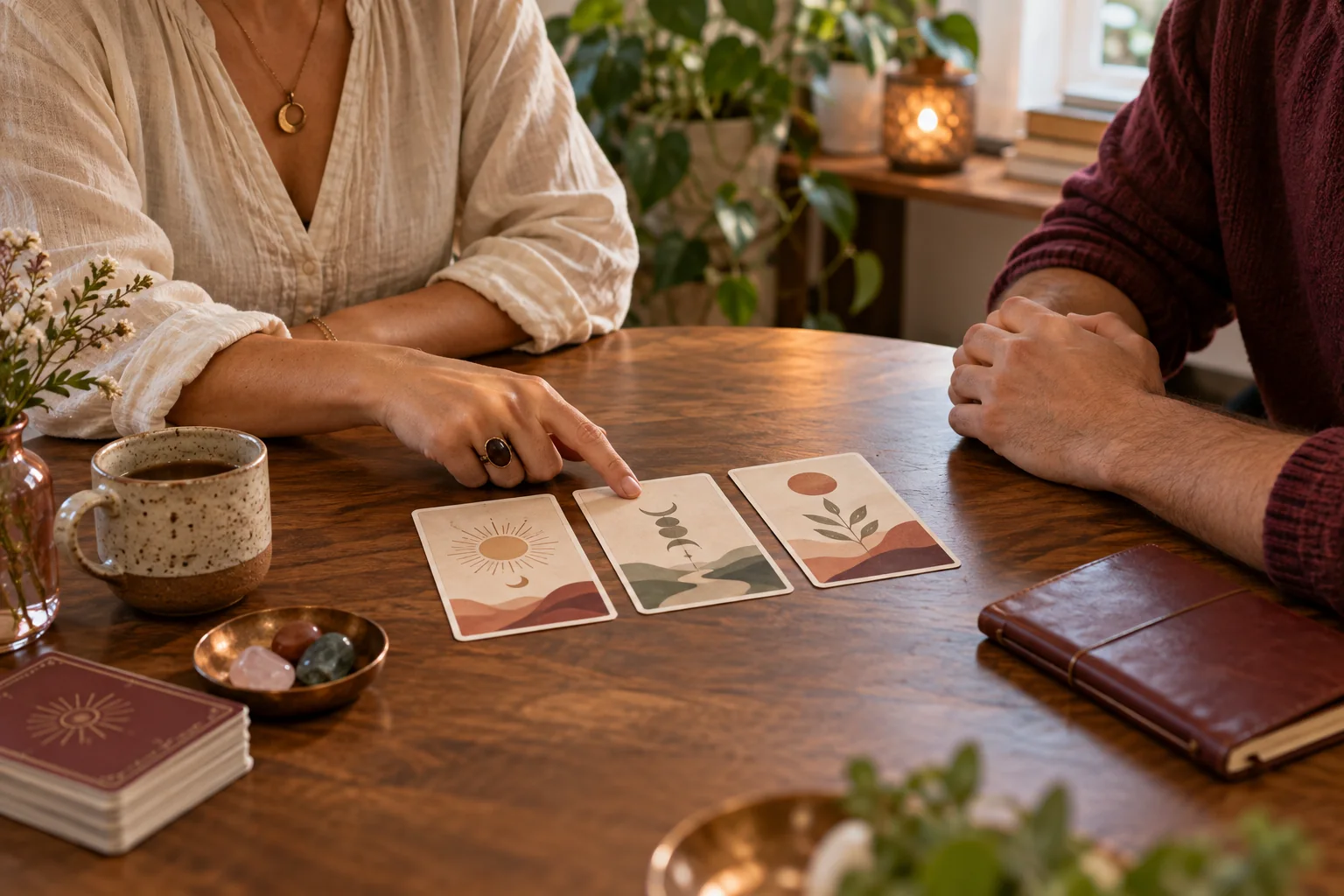
A person sitting on the bed with their hands over their face can trigger an intense reaction. The Nine of Swords lends itself to words like anguish, fear, or insomnia. But a card does not diagnose anxiety, does not reveal secret thoughts, and does not announce a tragedy. In a consultation, the priority is to speak carefully about what the person says they feel, to ask what support they want, and not to use the image to magnify their worry. This article offers practical phrases and boundaries for reading a difficult symbol without turning it into improvised clinical care.
- 19
- 210
What the Waite edition shows
Waite describes a figure sitting on a bed in an attitude of lamentation, with swords above her. His list of divinatory meanings uses grave words from his era. That source helps identify the Rider-Waite-Smith design and its reception, but it should not be used as a literal diagnosis or prognosis. A Marseille edition may show nine ornamental swords without a person on a bed. The visual reading that follows refers to Waite’s scene; if your deck is different, start by describing it.
We do not know from the image what happened to the figure, how long she has been like this, or what she needs. The bed does not prove insomnia, the hands do not prove a disorder, and the swords do not quantify nine worries. They are signs of an artistic composition. A person seeking a reading may recognize a similar emotion or may not. Their experience expressed in words takes priority over the metaphor. If they say “I’m not worried, I just want to understand the card,” do not turn their curiosity into a symptom.
How to open the conversation
One possible phrase: “This image is often used to talk about intense worry; does it feel relevant to your question, or would you rather look at another detail?” Another: “If there is an issue that keeps you from resting, we can distinguish what you know from what you fear.” Avoid “a misfortune is approaching,” “someone is going to get sick,” or “you have anxiety”; none of these can be deduced from the card. Also avoid promising “it’s all in your head” or “you just need to think positively.” There may be a real external problem and an understandable emotional reaction.
Asking with permission gives the person control. If they do not want to talk about an intimate topic, do not insist. A tarot reading can stay with image analysis, method, or a practical decision. There is no obligation to turn every dark card into a confession. In a paid session, explain the scope of the service and do not suggest that continuing to buy readings will relieve worry. If the person needs another kind of support, directing them toward it is more responsible.
Fictitious example: a pending email
Invented case. Ana is waiting for a response about a job proposal. The Nine of Swords appears in the “what weighs now” position. She says she mentally reviews three scenarios at night. The reader does not claim to “know” what will happen or diagnose her with a disorder. He proposes separating facts: proposal sent on Monday, announced two-week deadline, no subsequent message. Fears: that they have rejected her, that she made a mistake, that her work is not worth anything. The fears are understandable, but they are not yet confirmed.
Ana decides to check the submission once to confirm it arrived, prepare a job alternative, and set when she will follow up kindly. She also chooses not to check email continuously during the night. This action may help her manage the wait, but tarot does not guarantee relief. If the distress intensifies, lasts, or greatly affects her life, she will seek professional support. The NHS recommends seeking help when feelings of anxiety, fear, or panic are difficult to cope with or affect daily life. The card does not replace that evaluation.
A different version of the case could involve a real work threat, not only uncertainty. Then the list of facts would include messages, contract, and possible resources. Saying “your mind is trapping you” would erase the problem. The Nine of Swords can help name that the person is suffering while seeking information, without deciding which part is external or internal until it is verified. The reader must not assign blame.
A schema of facts, fears, and supports
Divide a sheet into three columns. In facts, place only verifiable information. In fears, note scenarios the mind contemplates, without treating them as prediction. In supports, write people, resources, or appropriate steps: conversation, professional, document, rest, or a deadline for reviewing. The exercise does not cure or diagnose; it helps avoid mixing levels of certainty. If the person feels worse while doing it, leave it. Their well-being matters more than completing a reading technique.
For a spread, the position guide helps separate whether the Nine of Swords appears as an expressed theme, risk of catastrophic interpretation, or request for support. Do not say that a “future” position predicts illness. If the spread design induces that kind of conclusion, reformulate the question or the method.
When to stop the reading
If someone describes intense suffering, inability to cope with the day, or risk of harming themselves, the response is not another spread. The WHO explains that there are supports and treatments for mental health problems, and local health services can direct people toward appropriate help. In a crisis or immediate danger, urgent attention should be sought according to the country where the person is located. Do not improvise international numbers that might not serve them. Ask about their location only if necessary to direct them to a local service; do not turn the situation into promotional content.
The tarot reader does not need to pretend to have clinical competence. They can say: “I cannot evaluate this with the cards. What you’re telling me concerns me, and it deserves professional support.” If the person is already receiving care, do not contradict their plan with an interpretation. If they ask about medication or diagnosis, refer them to their professional. These boundaries do not make the reading useless: they keep it within its field, where it can offer symbolic language, listening, and a question about next supports.
Rewriting an alarmist sentence
“This card announces a tragedy” can be changed to “the image is harsh; I would not use it to predict an event, but it can help us talk about the worry you already named.” “You will suffer for nine nights” can be changed to “is there a time of day when uncertainty weighs more, and what support do you have?” “Your mind creates the whole problem” can be changed to “let’s separate the verified data from the scenarios we do not yet know.” The second version of each sentence reduces unfounded claims and returns agency to the person.
Do a final check: does the person leave the reading with more clarity about facts and supports, or with more fear provoked by the reader? It is not possible to guarantee relief, but it is possible to avoid adding imagined threats. Do not seek dramatic impact or supposed revelations about health. The card already has visual force; it does not need an alarmist voice on top of it.
Closing
The Nine of Swords from Rider-Waite-Smith can represent worry in a specific scene. Rider-Waite Tarot from Scratch helps study that edition, always within the symbolic scope of tarot. In a real consultation, listen to what the person says, distinguish facts from fears, and point to appropriate supports. No card can diagnose or decide whether someone needs treatment. When suffering exceeds a tarot conversation, seeking professional help is the responsible step.