Sabio Tarot · Minor Arcana
Ace of Cups: emotional openness without a romantic promise

Fictitious example: Marta is finishing a period of isolation and asks what attitude can help her rebuild friendships. The Ace of Cups comes up. The easiest reading would be to announce a new love. The more useful one observes the type of question: Marta wants to be available again to listen, suggest plans, and receive company. The ace can represent that initial emotional openness. It does not identify a future partner or prove what another person feels.
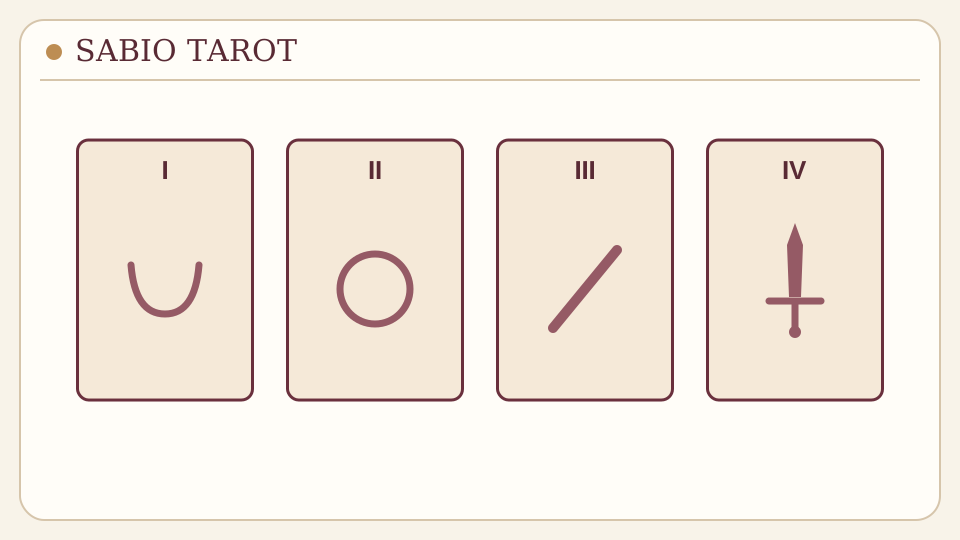
- 1Cups
- 2Coins
- 3Wands
- 4Swords
The image of a cup offered
Waite describes in Rider-Waite-Smith a hand emerging from a cloud and presenting a cup from which water flows, along with other symbolic details of that edition. The image does not show two people forming a couple. The primary description is in The Pictorial Key to the Tarot. The scene makes it possible to work with metaphors of receptivity, emotion, or care, always noting that they are interpretive inferences from the drawing.
In a Marseille Ace of Cups, the cup appears prominent and ornamented, without our automatically importing the flowing water or the cloud of Rider-Waite-Smith. The Metropolitan Museum identifies cups as one of the historical suits; the V&A explains that Pamela Colman Smith illustrated the minor cards of the deck published in 1909. Describing both editions precisely avoids treating one specific scene as if it were universal.
Openness is a capacity, not an obligation
Being emotionally open can mean recognizing a need, starting a conversation, or enjoying a shared activity. It can also mean setting aside space to feel something difficult without having to explain it right away. The Ace of Cups does not oblige you to forgive, start a relationship, or share intimacy with someone who does not inspire trust. A cup is offered in the image; in real life, each person decides what they receive, what they give, and at what pace.
In friendship, it could invite you to write to someone with whom you want to resume contact. In a project, it may indicate that motivation includes care, enjoyment, or a sense of community. In family, it might focus attention on a pending conversation about needs. In each case, the specific question guides more than a single meaning of “love.” The same card can appear when someone is learning to listen better and when they need to set a loving boundary.
Position and neighboring cards
In “personal resource,” the ace can name sensitivity or a willingness to connect. In “first step,” a simple proposal to meet is more realistic than a grand declaration. In “what is missing,” it might indicate a safe space to express something. In “risk,” it could lead you to review whether you are idealizing an opportunity because of the relief it produces. The last hypothesis requires supporting facts; it should not be imposed on a vulnerable person.
Next to the Two of Cups, the reading can move from individual availability to observable reciprocity. Next to the Four of Cups, it is worth exploring whether the person has energy to receive an offer. Next to an Ace of Swords, it can be useful to prepare clear words for an emotion. The cards do not reveal third parties' private feelings: reciprocity is known through gestures and conversations, not through the appearance of a cup.
Fictitious example: reconnecting with a friendship
Invented story for teaching, not a real reading. Marta has moved and hasn't written to her friend Sara for months. She asks: “What can I do respectfully to reopen contact?” She uses three positions: 1) her own willingness, 2) care for the other person, and 3) verifiable action. The Ace of Cups, Two of Swords, and Page of Pentacles appear. The ace in the first position speaks to Marta's intention, not Sara's response.
The Two of Swords reminds Marta that she does not know her friend's current situation and should avoid assumptions. The Page of Pentacles suggests a concrete gesture: a brief message proposing a coffee, giving space to respond, and accepting a no. The synthesis would be: “You can open the conversation from affection, without turning Sara's delay into a judgment about you or demanding immediate intimacy.” If Sara does not respond, Marta can tend to her disappointment and also seek other bonds. The ace does not guarantee reconciliation.
Imagine now that the Ace of Cups appeared in a question about an artistic project. There it could point to the emotion that moves Marta to create, not to a person in love. Changing context alters the reading. A responsible practice consists of asking before interpreting: “What relationship or activity are we talking about? What decision is in the hands of the person consulting?” Without those answers, romantic meanings can sound appealing but provide little help.
What should not be promised
The ace does not prove pregnancy, emotional healing, or the arrival of a partner. Nor does it turn every intensity into a sign of a healthy bond. If a relationship includes fear, pressure, or lack of consent, the language of “opening your heart” can be harmful. In that case, it matters to prioritize safety and appropriate support. Tarot can help organize questions, but it does not replace psychological or medical care or specialized advice when it is needed.
To practice, write three columns: “What I feel,” “what I can ask for,” and “what only the other person can decide.” The first column acknowledges your experience; the second turns a need into a proposal; the third marks a limit to the scope of the reading. If the topic does not include anyone else, change the last one to “what I will observe over time.” The four suits diagram compares the Ace of Cups (emotion) with the Ace of Wands (impulse and initiative), the Ace of Swords (clarity and decision), and the Ace of Pentacles (material resources).
Explore further with Cups, relationships, and affections, the four aces compared, and Tarot Rider-Waite from scratch. A good reading of the Ace of Cups concludes with a carefully tended possibility: opening a space to feel or converse and verifying, with consent, what can really be built.