Sabio Tarot · Reading methods and spreads
Five-Card Spread for Learning from a Mistake Without Punishing Yourself

After we make a mistake, it is easy to turn a spread into a trial: "Which card proves it was my fault?" This layout avoids that shortcut. Its five positions are the decision I made, the information I had at the time, possible bias, available repair, and learning for next time. The cards do not reconstruct facts you do not know or assign blame. They help you organize an honest analysis: what you could have known, what was missing, and what useful action remains today.
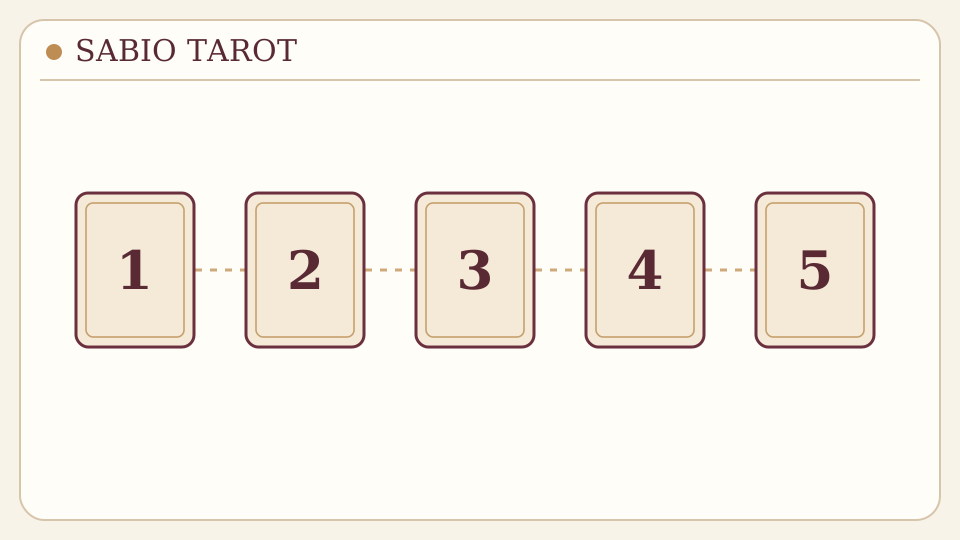
- 1Decision
- 2Information available
- 3Possible bias
- 4Repair
- 5Learning
First, write the sequence without the cards
Choose a specific, proportionate mistake to practice with. Write down when you decided, what alternatives you saw, what information was available, and what came later. The difference between information at the time and current knowledge is essential. A decision can seem clumsy when we know the outcome, yet have been reasonable with the data that existed. There may also have been signs we ignored. The reading serves to make that distinction without absolving everything or condemning everything.
Place the cards in a timeline. The first does not ask "who am I?" but "what specific decision am I reviewing?" The second refers exclusively to what was known before the outcome. The third examines a possible bias—haste, preference for one answer, overconfidence—and requires contrasting it with an alternative explanation. The fourth seeks repair under your control. The fifth formulates a revisable rule for similar situations. Do not do a reading about the responsibility of another absent person without their data and their voice.
Fictitious example: a misunderstood date
Fictitious example; it does not come from a real consultation. Bruno promised to deliver a poster on Friday because he thought the print shop accepted files until that afternoon. He discovered on Thursday that the actual deadline was Wednesday. The fact is that he did not read the whole email; he also knows that the message mixed several deadlines. He asks: "How do I analyze this mistake and what can I repair now?" In decision comes The Chariot: he rushed to confirm. In information available appears Page of Swords: he had the email and could review it, although the detail was easy to overlook. In bias comes Six of Wands: as a hypothesis, he wanted to give a quick answer to appear decisive. In repair appears Three of Pentacles: contact the team, explain the delay, and ask whether there is a printing alternative. In learning comes Justice: use a checklist with deadline, time zone, format, and responsible person before promising a delivery.
The synthesis does not say "Bruno is always impulsive." It says: "I confirmed without checking a piece of data that was in the message; I can report the mistake and propose a plan; before the next promise I will verify the deadline in writing." Bruno calls the print shop. Maybe they will accept a small print run; maybe not. Repair depends on their response, not on the Three of Pentacles.
If repair cannot undo the harm
A responsible action may not restore the original outcome. Bruno can apologize and assume costs, but not demand that the print shop reopen a closed deadline. The fourth card does not promise forgiveness, success, or control over third parties. Ask what you can do without invading their decisions: communicate early, offer alternatives, refund money if applicable, or seek professional help if the matter is contractual. In mistakes that caused serious harm, real consequences require appropriate attention; the reading does not replace legal obligations or formal procedures.
The fifth position also must not become an impossible promise of "never making a mistake again." A learning rule can be small and testable: "Before confirming dates, I will open the original document and copy the deadline line into the project sheet." If the same problem reappears, check whether the rule was viable or whether the process needs a second person to cross-check data. Learning does not mean thinking harder; sometimes it requires changing the work environment.
How to detect a bias without inventing a cause
In the example, the Six of Wands could suggest a desire for recognition, but it could also represent the real pressure to respond on time. Bruno should ask himself what he remembers from that moment: Did he want to appear efficient? Did he read the email on his phone during another job? Did he receive an urgent request? If he cannot distinguish those possibilities, write "bias unconfirmed." A card does not offer direct access to a past motivation. The value of this position is to keep the analysis from stopping at "it went badly for me" and to look for an explanation that can be tested.
Try a non-moralizing formulation: "Under pressure, I tended to close a task before verifying a deadline." That sentence describes a condition and a behavior; it allows designing a control. "I am irresponsible" generalizes from one episode and does not indicate what to change. If the mistake causes you intense shame, consider talking with someone you trust before sitting down to draw cards. There is no obligation to do a spread immediately after a failure.
Another perspective on the same facts
Imagine that the email had the wrong date and the print shop corrected the deadline afterward. Bruno should not maintain a confession of guilt based on false data. The information-available position changes: with the original message, his decision could have been reasonable. Repair could consist of sharing the discrepancy and agreeing on a new plan. This fictitious variant shows why the second card should never replace the document from the time. First facts are checked; then symbols are interpreted.
The general five-card spread helps read several positions without losing the question. This particular structure also requires a temporal boundary: on the left side of a line, write what you knew when deciding; on the right, what you know now. Below it, leave a sentence for possible repair. That record prevents judging a past decision with information you did not have then.
Closing Record
Write five sentences: "I decided...", "At the time I knew...", "My hypothesis about the bias is... and it could be something else", "Today I can repair...", "Next time I will check...". Add a review date and keep the text. If you only get a vague lesson like "be better," make it a concrete behavior. If no repair is possible, acknowledge the limit and avoid continuing to draw cards to change it. A responsible reading allows you to learn and act without pretending it controls the outcome or reducing a person to a single mistake.