Sabio Tarot · Reading methods and spreads
Four-Card Spread for a Transition

A change of job, city, or routine is often told as one door closing and another opening. That image forgets something important: not everything ends, not everything begins, and not everything is ready. This spread divides a transition into four positions: what ends, what continues, what is missing, and the first step. It serves to organize a reflection, not to guarantee how the change will turn out. Before shuffling, define a specific transition and check what facts you already know: dates, commitments, and real resources.
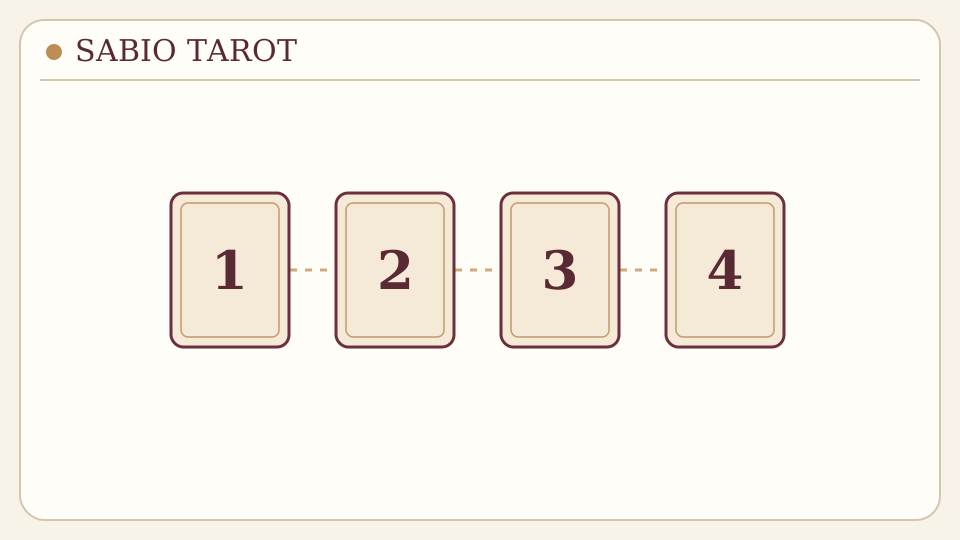
- 1What ends
- 2What continues
- 3What is missing
- 4First step
The Four Positions Form a Bridge
Place the cards in a line. The first, what ends, asks what practice, obligation, or expectation stops being useful. It does not have to represent a total loss. The second, what continues, recognizes abilities, ties, or responsibilities that cross over with you into the new setting. The third, what is missing, identifies pending information or support. The fourth, first step, proposes a small action that can be taken before resolving the entire transition. The order forces you not to jump from a painful goodbye to a promise of success without reviewing what remains in between.
Write a question with a time limit: “How do I prepare my routine change during the coming month?” If you do not yet know whether there will be a change, phrase something different: “What do I need to investigate before deciding?” Do not use the spread to assert that a company will hire, that a person will return, or that a move will be safe. Those facts require answers from the parties involved. The position of a card determines whether an image is read as continuity, lack, or action.
Fictitious Example: Leaving an In-Person Course
Invented case to explain the method; it is not a real consultation. Nadia finishes an in-person course and wants to continue learning on her own. She asks: “How do I sustain the practice during the next four weeks?” In what ends, Wheel of Fortune appears: she interprets that the external class calendar ceases, not that her interest depends on chance. In what continues, Eight of Pentacles appears: she keeps the habit of doing exercises and the ability to review mistakes. In what is missing, Two of Wands appears: she needs to choose between two study paths and specify which one has available materials. As the first step, The Hermit appears: she books an individual session to organize her notes and outline a brief plan.
Nadia writes a relational synthesis: “The course structure ends, but not my practice. Before expanding content, I must choose a path; today I will organize notes and set two sessions.” She then checks access dates for the recordings and her teacher’s recommendations. The spread does not tell her which manual is objectively better or how many weeks it will take her to master the subject.
What Continues Can Be a Burden
Do not turn the second position into “all the good things I keep.” A responsibility can continue and require negotiation. If Nadia had started a job with variable hours, perhaps her study habit could not stay the same. The continuity card would ask her to examine what part of the habit is flexible: two twenty-minute sessions may be more realistic than repeating four hours of class. A not-very-useful expectation can also continue, such as wanting immediate answers. Note what is kept as a resource and what is kept as a restriction.
The third position also does not equal “personal defect.” “Missing information about schedules” is different from “I lack discipline.” The first is resolved by consulting a calendar; the second is a label that can hide many causes. In a transition, separating concrete needs from judgments about yourself reduces fatalistic readings. If a card unsettles you, write two explanations and ask what data could distinguish them before drawing another.
An Alternative Reading of the Example
The Wheel in “what ends” could also refer to the idea of waiting for a perfect moment to study; the Eight of Pentacles in “what continues” would indicate modest but stable practice; the Two of Wands in “what is missing” would ask her to choose objectives; The Hermit would suggest a solo review. Which version serves Nadia more? Her course record shows that the external calendar was central. If she also stopped studying while waiting for the next class, the second interpretation adds a nuance. There is no need to declare a single universal translation of the Wheel. The question and the facts limit the scope of each sentence.
You can do the same test with your own spread: take the first card and write two possible things that could end. Discard the one that finds no support in your situation or turn it into a question to investigate. Repeat with the third: is a resource, a conversation, a piece of data, or a decision missing? The more concrete the gap is, the easier it will be to avoid letting the fourth card become a leap of faith.
From Symbol to an Honest Review
Write four phrases in a table: “I stop…”, “I keep…”, “I need to find out…”, “This week I will…” The last one must be able to be marked as done or not done. Nadia can record whether she organized the notes, whether she chose a path, and what difficulty she encountered. After four weeks, add a note without erasing the initial interpretation. If the plan changed because of an unexpected opportunity, say that new information arose; do not rewrite the reading so that it seems as if it had predicted it.
Imagine the four steps as a bridge: behind you is what you already know; ahead is a stretch you cannot yet draw because data are missing. That gap does not announce a mystical danger. If the transition involves housing, work, health, or rights, use the spread to organize questions and confirm the conditions with documents, responsible parties, and relevant professionals. The reading ends when it leaves a proportionate action and acknowledges what we still do not know.
If the Transition Was Not Chosen
Not all changes come from a free decision. If you are told about a cancellation, a forced move, or the closure of a project, it may be unfair to ask immediately “what opportunity is it bringing me?” Start with the facts and the available support. The first card can help you name a loss without glossing over it; the second, to recognize what remains; the third, to list documentation, deadlines, or people to ask. The fourth should only propose a step that is manageable today, perhaps resting, saving a document, or making an appointment. It is not an order to feel optimism.
In Nadia’s example, the end of the course was planned; it could be prepared for. If it had been canceled without notice, her first step would not have to be designing an entire month of study. She could ask for access to materials already paid for and find out the refund conditions. The same four-position structure still works, but the size of the action and the missing data change. The spread does not replace contractual rights or a conversation with the center.