Sabio Tarot · Reading methods and spreads
Three-Card Spread for Setting Boundaries

Setting a boundary does not require discovering through tarot what the other person “is.” It requires clarifying what you need, what you can communicate, and what you will do if a behavior continues. This spread uses three positions: your own need, communicable request, and your own boundary. The third is neither a threat nor a prediction of punishment; it is an action within your scope of decision. In the face of danger or abuse, seek appropriate support and a safety plan before attempting a conversation.
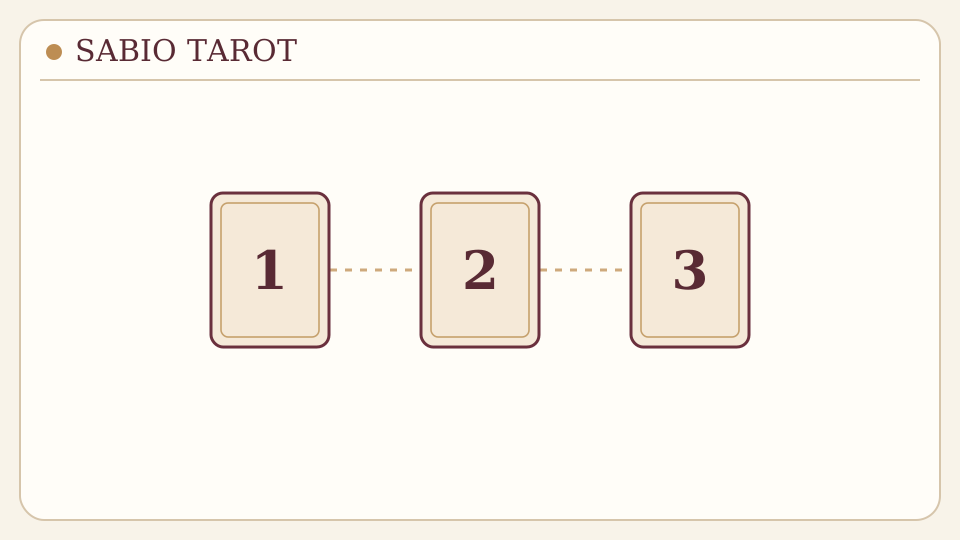
- 1Need
- 2Communicable boundary
- 3Manageable consequence
From a Vague Emotion to a Concrete Sentence
Write a question focused on your behavior, for example: “How can I explain that I need advance notice for changes of plan?” The first card helps you name the need without turning it into a diagnosis. The second asks for a short sentence that expresses a request about an observable behavior: “If you change the time, let me know the day before.” The third asks what you will do if it does not happen: “I will not reserve that afternoon without confirmation.” The reading must respect that the other person can accept, propose another solution, or disagree.
Do not replace “I need to know beforehand” with “the cards say you are selfish.” That sentence attributes character and authority to a drawing. Nor should you write a boundary you will not be able to keep: “I will never speak to you again” may not describe your real intention. The usefulness of the third position depends on it being proportionate and viable.
Fictitious Example: Plans That Change at the Last Minute
Invented example for this article. Irene carpools with a friend some days. Last-minute changes make it difficult for her to organize her appointments. She asks how to set a boundary. In need, Four of Pentacles appears; Irene reads a need to set aside time and resources, without attributing malice to her friend. In communicable request, Ace of Swords appears; she writes: “Confirm with me before six in the evening whether we are carpooling tomorrow.” In your own boundary, The Chariot appears; she decides that, if there is no confirmation, she will plan her route on her own.
In the conversation, Irene explains the problem and listens to whether the timeframe is possible. Perhaps they agree on another time. Tarot did not predict that the friend would get angry or change; it helped Irene prepare a clear proposal. The synthesis is “I need enough certainty to organize myself; I will ask for confirmation and have a backup plan.”
Check the Quality of the Boundary
Ask yourself whether the sentence identifies a behavior, a realistic timeframe, and an action that depends on you. If it only describes what the other person should feel or do, rewrite it. After speaking, note what was agreed and review the boundary with that new information. The guide reading for another person helps you avoid invading others’ decisions; closing a reading shows how to end without asking for impossible certainties. Check the chain “need → sentence → your own action” and remove any psychological label about the other person.
The Difference Between a Request, a Boundary, and a Threat
A request proposes a behavior to the other: “Can you confirm the trip the previous afternoon?” A boundary explains what you will do to take care of a need: “If there is no confirmation, I will arrange my transportation another way.” A threat tries to force a reaction through a punishment unrelated to the problem. This difference matters because the third position of the spread can be misread as a “consequence” that we must impose on another person. In Irene’s reading, planning her own route is proportionate to the change of schedule; judging or shaming her friend would not be.
When you write the sentence, test it without cards. Could you say it calmly and stand by it if the other person disagrees? Does it really depend on you? Is the condition linked to the problem? If any answer is no, modify the boundary. Tarot can inspire the draft, but the quality of communication is verified with real words and behaviors.
Two Possible Readings of the First Card
Four of Pentacles in “need” led Irene to think about setting aside time. It could also indicate that she is clinging to a plan that needs greater flexibility. How to distinguish it? By reviewing facts. If the changes occur once a month and both had accepted it, perhaps a different notice is enough. If they happen every week and cause Irene to miss appointments, the need for confirmation carries more weight. The card does not record frequencies; Irene can look at messages and calendar. Do not use the meaning of “control” to diagnose either person.
In the second position, the Ace of Swords can support a crisp sentence, but it does not force you to deliver it harshly. An aggressive version would be “If you fail again, you’ll see.” A clear version would be “I need to know before six whether we are carpooling tomorrow; if I don’t know, I will reserve another option.” The difference is not in the card, but in precision, tone, and responsibility for your own action.
A Second Fictitious Case with a Different Boundary
Invented case, separate from Irene’s. Daniel receives work messages outside his schedule and wants to rest without leaving urgent tasks uncovered. He formulates “How can I communicate my availability?” In need, Four of Swords appears: it identifies rest and focus. In communicable request, Justice appears: he writes out the schedule stated in the work agreement and asks what procedure exists for emergencies. In your own boundary, Eight of Pentacles appears: he decides to check messages at the start of his workday and organize the tasks then. The cards do not interpret the contract or guarantee that the company will accept the change.
Daniel checks his agreement, consults the official channel, and raises the issue with his manager. If there is a different work obligation, he will need reliable information or advice; he will not declare “Justice proves I’m right.” The spread allowed him to prepare a conversation and recognize a need, not to resolve a legal right. This distinction protects both his rest and the accuracy of what he states.
What to Do If the Boundary Is Not Respected
Do not draw successive cards to guess when the other person will change. Record what was agreed, apply the action that was under your control, and evaluate whether you need to modify the relationship, seek mediation, or ask for support. In Irene’s case, she can stop reserving the shared car when there is no confirmation. In Daniel’s, he can document the messages and consult the relevant channels. If you feel in danger, seek immediate, specialized help; the priority is not to find a better interpretation.
Close the spread with a brief record: need in the first person, observable behavior, exact sentence, your own action, review date, and new information. Keep the original record after speaking. If the agreement changes, add a later note instead of pretending the cards already contained the answer. That way you learn which part of the reading helped you think and which part came from the other person and the real world.