Sabio Tarot · Reading methods and spreads
Three-Card Spread to Review a Previous Reading

When rereading an old spread, it is tempting to think “in reality the card already said this.” That phrase can erase the doubt that existed when you did the reading. This three-card layout helps you learn without rewriting the past. The positions are original interpretation, observed facts, and new hypothesis. The second is not filled in only with symbols: first write what actually happened; if you later use a card, let it be only a lens to interrogate them. The third does not prove that you now know everything; it opens a question for continued practice.
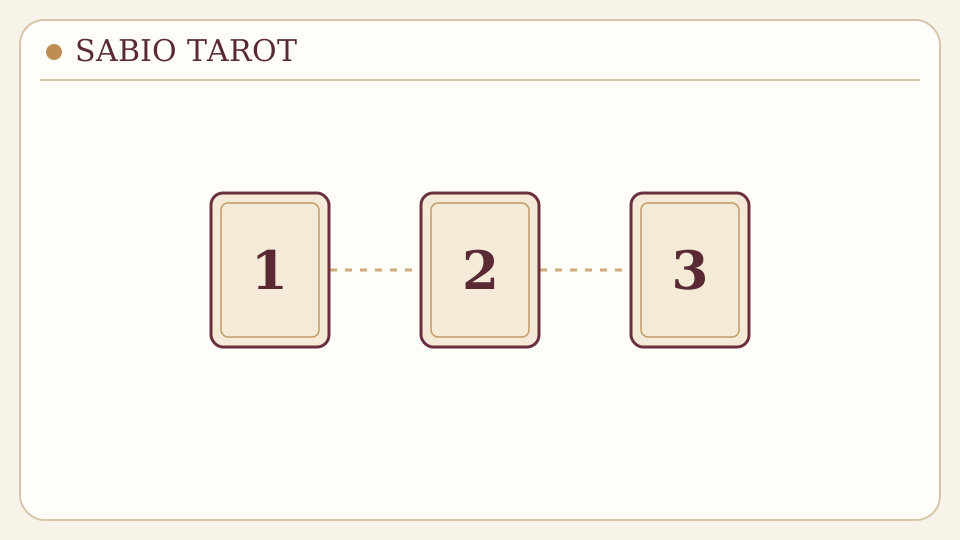
- 1Earlier interpretation
- 2Later observations
- 3Revised hypothesis
You Need a Dated Page Before You Start
Find the old question, the order of the cards, and the sentence you wrote that day. If you kept nothing, you will not be able to verify precisely what you thought; you can reflect on the experience, but not present the review as an analysis of a prediction. Copy the original sentence in quotation marks and do not edit it. On another line, list later events with date and source: an email received, a decision made, a task finished. Also separate what you do not know. Only then formulate the new question: “What did I learn from my interpretation, and what hypothesis deserves testing now?”
The first card represents how I read, not “what the old card really meant.” The second invites you to examine the relationship between my reading and the recorded facts; it does not replace those facts. The third helps draft a new approach that I can review later. This structure prevents memory from secretly changing the story. If you have never used a journal, the thirty-day practice guide offers a way to start with brief records.
Fictitious Example with Two Dates
Journal invented to teach the method. On September 3, Paula asked: “What should I observe before proposing a collaboration?” She drew three cards in an earlier spread and wrote: “The project seems to move forward if I send a proposal this week; I expect a quick response.” On September 20, she records two facts: she sent the proposal on the 5th and received a response on the 18th asking for more details. There was neither acceptance nor rejection. The word “quick” in her original note does not hold up if she expected a reply in two or three days; it is worth preserving that discrepancy.
To review, Paula first writes the facts with their dates, just as she did on September 20. Then she draws Justice for original interpretation, Seven of Pentacles as a lens to interrogate the observed facts, and Page of Swords for new hypothesis. Read the first as a reminder to evaluate her words with the same rigor as any data point: it will not soften “quick” into “at some point.” The second leads her to look at the waiting interval and the work of preparing the proposal, but it does not create the facts: the dates were already written. The third suggests preparing clear questions about what the other party needs to know. Her new synthesis is: “I overestimated the speed; there is still no decision; I will prepare a precise response and wait for data.”
The Error of Being Right Afterward
Imagine that on the 25th the collaboration is confirmed. Paula could say retrospectively, “The progress card meant acceptance.” But her initial sentence also included the expectation of a quick response and did not distinguish acceptance from a request for data. An honest evaluation records both things: she took a useful action by sending the proposal; her timing expectation was too certain. There is no need to call the entire reading “failed” or to credit it with a complete hit. The learning lies in gauging what part was a reasonable hypothesis and what part exceeded the evidence.
It can also happen that an old reading seemed negative and later the project turned out well. Ask what alternative you did not consider and what new information changed the picture. Do not turn a difficult card into a warning that “in reality” meant success. That kind of reinterpretation leaves the method with no possibility of correction: any result would end up seeming foreseen. To practice, mark in your journal with two colors the verifiable sentences and the sentences open to many interpretations.
Three Columns for a Fair Review
Draw a table with what I wrote then, what happened afterward, and what I can say now. The last column allows three answers: confirmed, contradicted, or still uncertain. “I moved forward by sending the proposal” can be confirmed; “I will receive a quick response” may be contradicted by the dates; “the collaboration will be accepted” remains uncertain if it has not yet been decided. You can add a fourth column of “missing data.” This discipline protects against the temptation to use vague words like “energy,” which fit almost any result.
Then choose a single new question that depends on you: “What information do I prepare in order to respond?” If the matter requires a contract or budget, check them with the people responsible. Do not repeat the old query to obtain a more reassuring sentence. The new spread has a learning function, not the mission of correcting the past.
When the Third Card Does Not Help
The third card can generate another attractive but vague hypothesis. If Paula interprets the Page of Swords as “I must be more attentive,” ask “attentive to what?” She can review the email, gather the requested data, and ask for a response deadline. If there is no action that corresponds to the new context, leave the card as a study note and close. A previous reading does not need to be resolved perfectly; some questions remain open.
Keep the old page and the new one, both dated. Place them side by side: on the first, underline what you wrote before knowing the outcome; on the second, note the facts you learned afterward. Do not copy another person's private data to prove that your reading was right. The usefulness of this practice depends on preserving the original record, accepting corrections, and explaining where each piece of data came from.
When You Do Not Remember What You Meant
An old note like “important change” can seem prophetic because it allows for many results. Do not now invent a precision that you did not write. Mark the phrase as too broad and rehearse a better formulation for next time: “If I receive a response before the 20th, I will decide which document to prepare.” The improvement does not turn the past reading into a hit or an error; it changes your recording method. A journal can also include the emotion of the moment, because the desire for a quick response influences how you read the card.
If the date, question, or order of positions is missing, preserve the uncertainty. You can compare the cards as a new exercise, but do not claim that you are auditing what you thought months ago. This distinction prevents a false memory. For future readings, a minimal record is enough: literal question, positions, cards, written interpretation, and review date. A photograph of your table can help, as long as you respect the rights of the deck and the privacy of any participant; there is no need to publish the journal.