Sabio Tarot · Minor Arcana
Three of Swords: Interpreting Pain Without Dramatizing
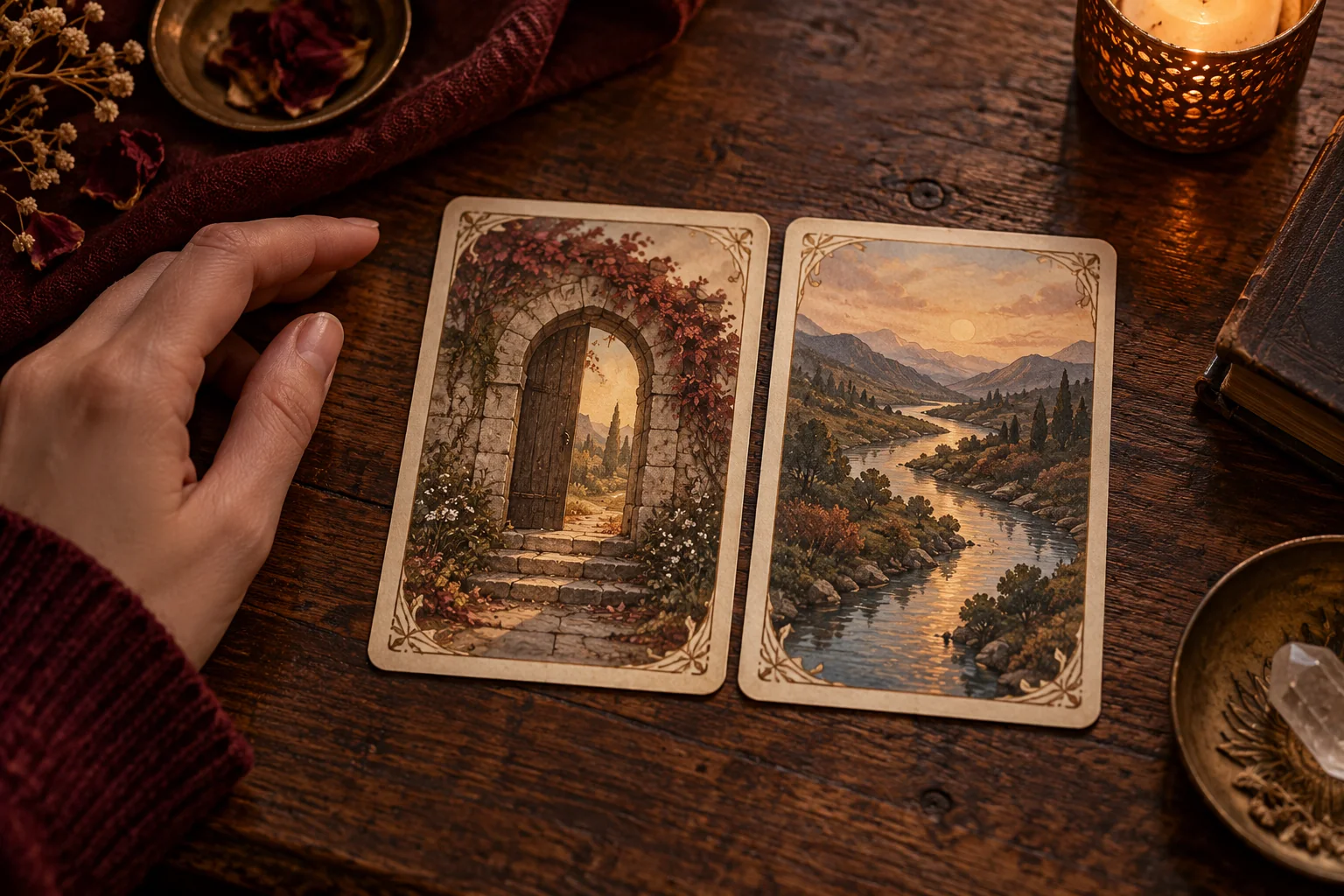
The Three of Swords from Rider-Waite-Smith is one of the images that most impresses beginners: a heart pierced by swords in the rain. If it appears in a consultation about a relationship, it is easy to say 'there will be a betrayal' before knowing a single fact. That sentence can sow suspicion and cause harm. A responsible reading separates three layers: what the card shows, what the person has lived through, and what support or decision they need now.
- 11
- 22
- 33
- 44
An intense image is not proof of an event
Waite describes three swords piercing a heart, with clouds and rain behind. The primary source documents that composition in his deck. It can serve as a metaphor for pain, separation, disappointment, or thought that wounds, depending on context. It does not prove infidelity, illness, death, or a future episode. Nor does it measure the suffering of the querent: a strong symbol does not authorize exaggerating their situation to make the reading more dramatic.
In a Marseille Three of Swords, three swords are seen in a numeral arrangement, not the pierced heart of Rider-Waite-Smith. Some readers find similar associations from number and suit, but they should present them as interpretations. The Metropolitan Museum documents the numerals of the historical suits and the V&A explains Pamela Colman Smith's role in the scenes of the Rider-Waite-Smith. Comparing editions helps prevent turning a graphic choice from 1909 into the literal essence of all the cards.
Ask about facts before naming a cause
If the querent says she argued with a friend, the card can open a conversation about the words that hurt, the misunderstanding, or the boundary that was crossed. If she recounts no conflict, it is not appropriate to invent one. The reader can ask: 'Is there any disappointment or difficult conversation you want to explore?' The person can answer yes, no, or that they do not want to talk about it. Any of those answers must be respected.
When there is pain, it is important not to reduce it to a dictionary meaning. The same sentence can be a minor annoyance for one person and a rupture of trust for another. The interpretation should follow the narrated experience, not grade it based on the image. It is also advisable to avoid assigning blame to an absent person. Tarot does not allow interrogating facts that are unknown or listening to the version of someone who is not present.
Depending on the position in the spread
In 'what weighs,' the three can represent a wound already recognized. In 'what I need to name,' it perhaps invites finding words for a disappointment. In 'risk,' it could lead to reviewing a communication that can cause avoidable pain. In 'action,' it does not mean provoking a breakup; it can be asking for support, clarifying a sentence, or stopping a conversation that has become harmful. In 'outcome,' it should not be read as inevitable condemnation.
Next to the Ace of Swords, the problem of telling a difficult truth with care may appear. Next to the Two of Cups, it asks whether there is room to repair or agree on boundaries. With the Four of Swords, it perhaps points to the need for a pause before responding. The meaning of the combination depends on positions and facts; there is no formula 'three plus two = reconciliation.'
Fictitious example: a public criticism
Completely invented scenario. Alma publishes a story and a colleague gives harsh criticism in a meeting, without warning her beforehand. Alma asks: 'How can I respond without denying that it affected me?' She defines three positions: 1) current experience, 2) data to clarify, and 3) possible response. The Three of Swords, Page of Swords, and Queen of Cups come up. The first card does not announce a new betrayal: it relates to the pain Alma has already described.
The Page of Swords invites separating concrete phrases from interpretations about intention. Alma writes down what was said and asks her colleague whether she meant to question the text or her ability. The Queen of Cups in third position can inspire a boundary formulated without humiliation: 'I accept comments about the story, but I need disagreements to be presented without personal attacks.' We do not know how the colleague will respond. Alma can ask a third person to facilitate the conversation or decide not to have it yet.
The synthesis is limited and useful: 'The pain exists; before attributing intention, verify the words and decide what treatment you accept.' If the colleague apologizes and changes her behavior, there will be a possibility of repair. If she repeats the attack, Alma will be able to protect herself in another way. None of those endings was written in the Three of Swords. The card organized questions about experience, facts, and support.
Safe language in a reading
Avoid 'they are going to break your heart,' 'your partner is cheating on you,' or 'this will be devastating.' Try 'the image is strong; does it resonate with something you already know, or would you prefer we explore another reading?' and 'I cannot deduce a future fact from this card.' It is not about softening the image until it becomes useless: it is about not adding events that have not occurred. If the person reports abuse, threats, or risk, the priority is safety and specialized support, not a more intense symbolic interpretation.
The Three of Swords can also appear in questions about writing, learning, or decisions: a critique, a recognized mistake, the cost of choosing. Not every appearance implies romance. If a bond ends, there is also no universal deadline for 'healing.' The querent decides what they need to share. An attentive reader can offer silence, rephrase the question, or end the session if continuing does not help.
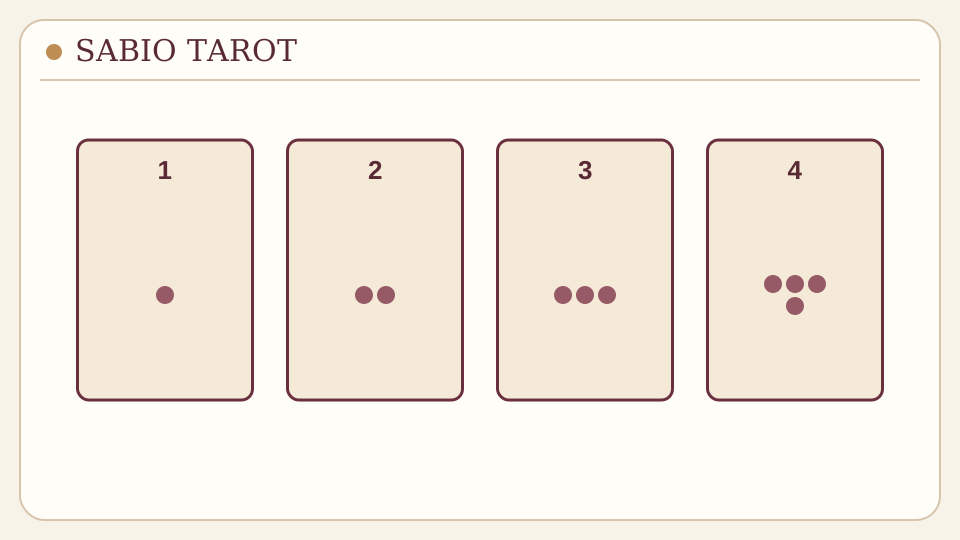
As practice, make three lines: observed image, confirmed fact, and next action under your control. Do not allow the first line to automatically fill in the second. The diagram of the three allows you to count the symbols before adding the emotional meaning proposed by a specific deck. Continue with Swords and Thought and Rider-Waite Tarot from Scratch. Reading improves when it stops competing to be impactful and helps the person recognize their experience with precision.